Progressive Web Apps, commonly known as PWAs, have reshaped how businesses approach digital product development. In 2026, organizations will no longer choose PWAs just because they are trendy. They choose them because they deliver strong performance, cross-platform compatibility, and cost efficiency without compromising user experience.
As mobile usage continues to dominate global internet traffic, businesses face a crucial decision: invest in native mobile apps, hybrid solutions, or PWAs. For many, the deciding factor comes down to one question: how much does progressive web app development cost in 2026?
The reality is that Progressive Web Apps development costs are not fixed. They depend on technical requirements, business goals, and long-term scalability needs. This guide breaks down how much a PWA costs to build, what affects pricing, and how businesses can plan a realistic budget while maximizing return on investment.
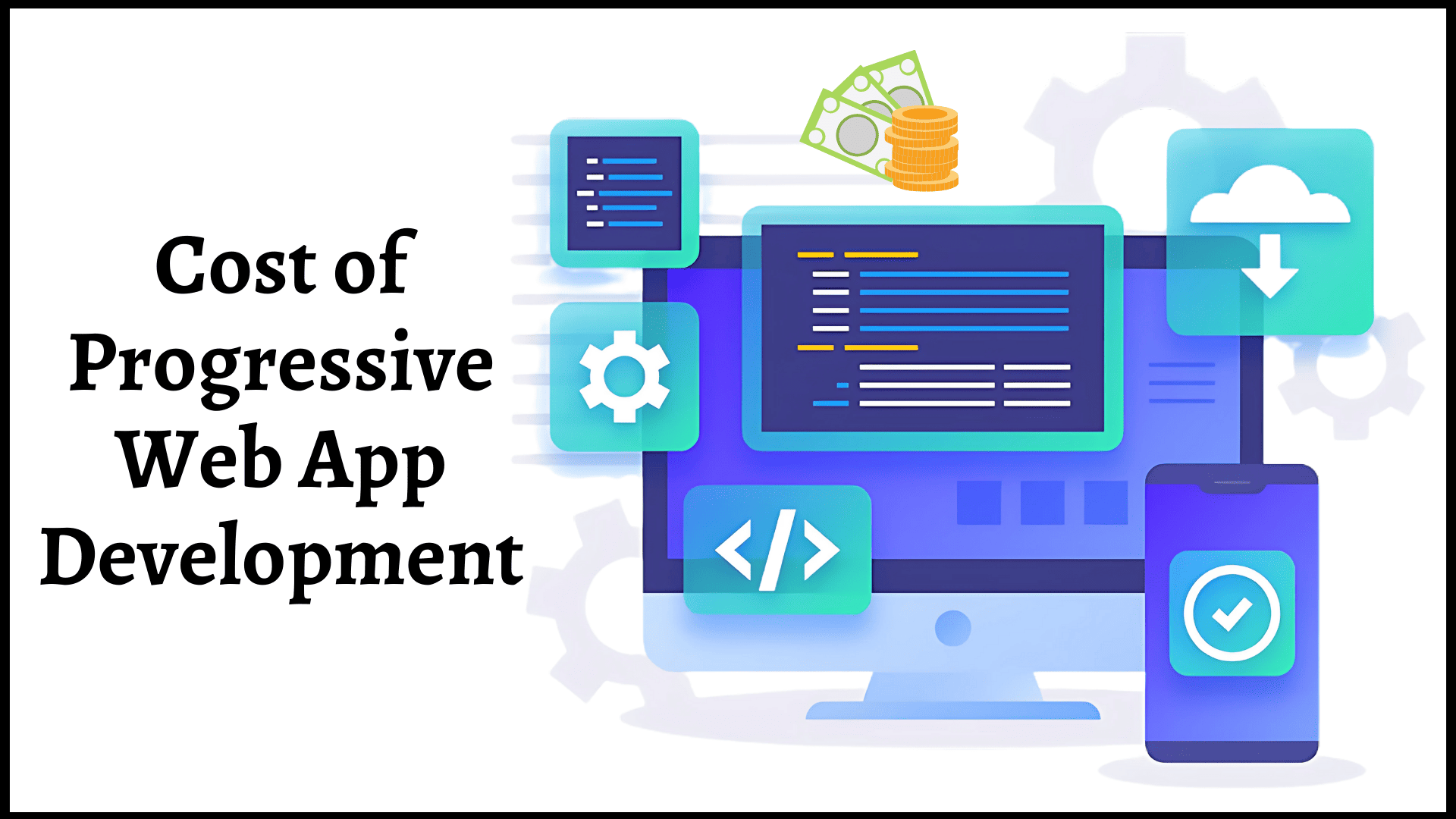
Progressive Web App Development Cost
To understand what is the cost of PWA development, it is important to look at real-world pricing models rather than vague estimates. In 2026, the average cost of progressive web app development generally falls into three broad categories.
- A basic PWA, typically costing between $3,000 and $10,000, is suitable for simple use cases. These applications usually include offline support, responsive layouts, fast load speeds, and basic push notifications. They work well for blogs, content platforms, startup landing pages, and informational business websites.
- A mid-level PWA, costing around $10,000 to $30,000, is designed for businesses that require dynamic functionality. This may include user authentication, dashboards, API integrations, real-time data updates, and custom UI elements. Many startups and growing businesses fall into this category because it offers a balance between functionality and budget.
- An enterprise-grade PWA can cost anywhere from $30,000 to $100,000 or more. These applications support complex workflows, large user bases, high security standards, advanced analytics, and integrations with internal systems such as CRM, ERP, or payment gateways.
So when businesses ask how much it costs to build a PWA, the honest answer is that it depends on scale, not just features.
Factors Affecting Progressive Web App Development Costs in 2026
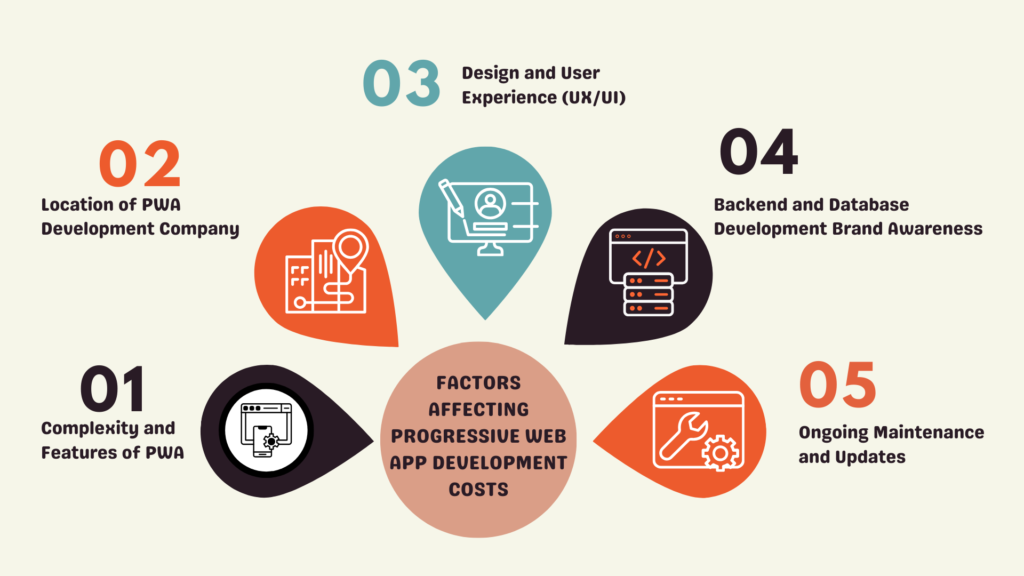
1. Complexity and Features of PWA
The complexity of your PWA directly influences development time and cost. A simple PWA can be developed relatively quickly, while a complex system may require months of planning, testing, and optimization.
Basic features such as offline access, caching, and responsive layouts are relatively affordable to implement.
However, when businesses require advanced capabilities like real-time synchronization, AI-driven recommendations, custom dashboards, or multi-user role management, development costs increase significantly.
For example, PWA development cost for startups is often lower because startups usually begin with an MVP focused on essential features. On the other hand, PWA development cost for enterprise projects is higher due to scalability, compliance, and security requirements.
The more logic, data handling, and integrations your application needs, the higher the overall cost will be.
2. Location of PWA Development Company
The geographic location of your development partner plays a major role in determining cost. In 2026, the PWA development cost per hour varies widely across regions.
- Development teams in North America and Western Europe typically charge higher hourly rates due to higher labor costs and operating expenses. These rates often range from $100 to $300 per hour.
- Eastern European developers generally offer a balance between cost and expertise, with hourly rates ranging from $50 to $150.
- South Asia and Southeast Asia remain popular outsourcing destinations, with rates between $20 and $80 per hour. Many businesses reduce PWA vs native app cost by outsourcing development while maintaining quality through experienced teams.
Choosing the right location is not about finding the cheapest option, but about finding a reliable team with proven experience in PWA architecture and performance optimization.
3. Design and User Experience (UX/UI)
Design is not just about aesthetics. In PWAs, UX and UI directly affect engagement, retention, and conversions. A poorly designed PWA, even with strong features, can fail to deliver results.
Template-based designs are cost-effective and suitable for early-stage projects.
However, businesses that want strong branding, intuitive navigation, and seamless interactions often invest in custom UX/UI design. Custom design work involves research, wireframing, prototyping, testing, and iteration. This process adds time and cost but often leads to better long-term performance. In 2026, custom UX/UI design can add $5,000 to $15,000 or more to the total development cost.
For ecommerce platforms, design plays an even bigger role. This is why PWA development cost for ecommerce projects is often higher than for simple informational PWAs.
4. Backend and Database Development
A Progressive Web App may look like a frontend-focused solution, but most PWAs rely heavily on backend systems. These systems manage user data, content, transactions, and integrations with third-party services.
Backend development costs depend on factors such as database structure, cloud infrastructure, API usage, and security requirements.
Simple PWAs may use lightweight backend solutions, while enterprise applications require robust architectures capable of handling large volumes of data. In 2026, backend and database development can range from $5,000 to $25,000 or more depending on complexity. This is a significant component of what is the cost of PWA development, especially for applications that rely on real-time data or sensitive information.
5. Ongoing Maintenance and Updates
Many businesses underestimate the importance of post-launch maintenance. PWAs require regular updates to stay secure, fast, and compatible with evolving browser standards.
Ongoing maintenance typically includes bug fixes, performance optimization, security patches, and feature enhancements. Most companies allocate between 10 and 20 percent of the initial development cost annually for maintenance.
Planning for maintenance early helps avoid unexpected expenses and ensures long-term stability, especially for business-critical applications.
Benefits of PWA Development Services
One of the most common questions businesses ask is is PWA cheaper than native app development? In most scenarios, the answer is yes.
PWAs eliminate the need to build and maintain separate apps for iOS and Android. This alone significantly reduces development and maintenance costs. When comparing PWA vs native app cost, businesses often find that PWAs offer faster deployment and lower long-term expenses.
Additional benefits of PWA development services include improved performance, offline accessibility, SEO advantages, and independence from app store approval processes. PWAs also provide a better alternative when comparing PWA vs mobile app cost or progressive web app vs website cost, as they combine the strengths of both.
How to Create a PWA Within Budget?
Creating a PWA within budget requires strategic decision-making rather than cutting essential features. Businesses should begin by defining clear goals and identifying which features are necessary for launch.
Launching with a Minimum Viable Product allows businesses to test the market, gather user feedback, and refine the application before investing in additional functionality. This approach is particularly effective for startups and small businesses managing PWA development costs for small business projects.
Choosing proven technologies, avoiding unnecessary customizations, and working with an experienced development partner can significantly reduce costs without sacrificing quality.
Tips to Optimize PWA Development Cost
Define requirements clearly
Clear documentation helps prevent scope creep, miscommunication, and rework. When requirements are well-defined, developers can estimate costs more accurately and deliver on time.
Choose the outsourcing partner carefully
Not all development teams have deep experience with PWAs. A skilled partner can optimize performance, architecture, and scalability, ultimately saving money in the long run.
Avoid Hidden Costs
Hidden costs often include cloud hosting, third-party APIs, licensing fees, and post-launch support. Factoring these expenses into the initial budget helps maintain transparency and financial control.
Key Industries Benefiting from PWA Solutions
PWAs are widely adopted across various industries due to their efficiency and cost savings. Some key sectors benefiting from PWA solutions include:
- E-commerce: Faster loading speeds and offline capabilities enhance user experience, leading to higher conversions.
- Media & News Portals: PWAs allow readers to access content offline and improve engagement with push notifications.
- Healthcare: Appointment scheduling, patient portals, and real-time updates improve service efficiency.
- Finance & Banking: Secure and fast interfaces ensure better transaction management for users.
- Travel & Hospitality: Offline maps, booking features, and seamless interactions make PWAs ideal for travel services.
How Can CSSChopper Help You With PWA Development?
CSSChopper, a top PWA development company, offers tailored PWA solutions to build high-performance, cost-effective web apps. With expertise in modern technologies, CSSChopper ensures scalable, engaging, and SEO-friendly PWAs that drive conversions.
The progressive web app development cost depends on complexity, features, and the chosen development team. Whether opting for a budget-friendly PWA solutions provider or a premium agency, understanding the cost factors helps make an informed decision. If you’re looking to build a powerful PWA, partnering with experienced progressive web app developers is the best way forward.
Ready to transform your digital presence? Get started with PWA solutions today! You can also hire progressive app developers at CSSChopper for your project.
Categories
Recent Posts
Popular Posts
- How to Choose a Reliable Offshore Development Partner?
- Transforming Web Development with HTMX’s Declarative Approach for Dynamic UIs
- Top 15 Ecommerce Growth Strategies to Maximize Sales in 2026
- What is B2B Web Design? Benefits, Best Practices, and Examples
- Why Your Conversion Funnel Needs a Composable Commerce Solution?