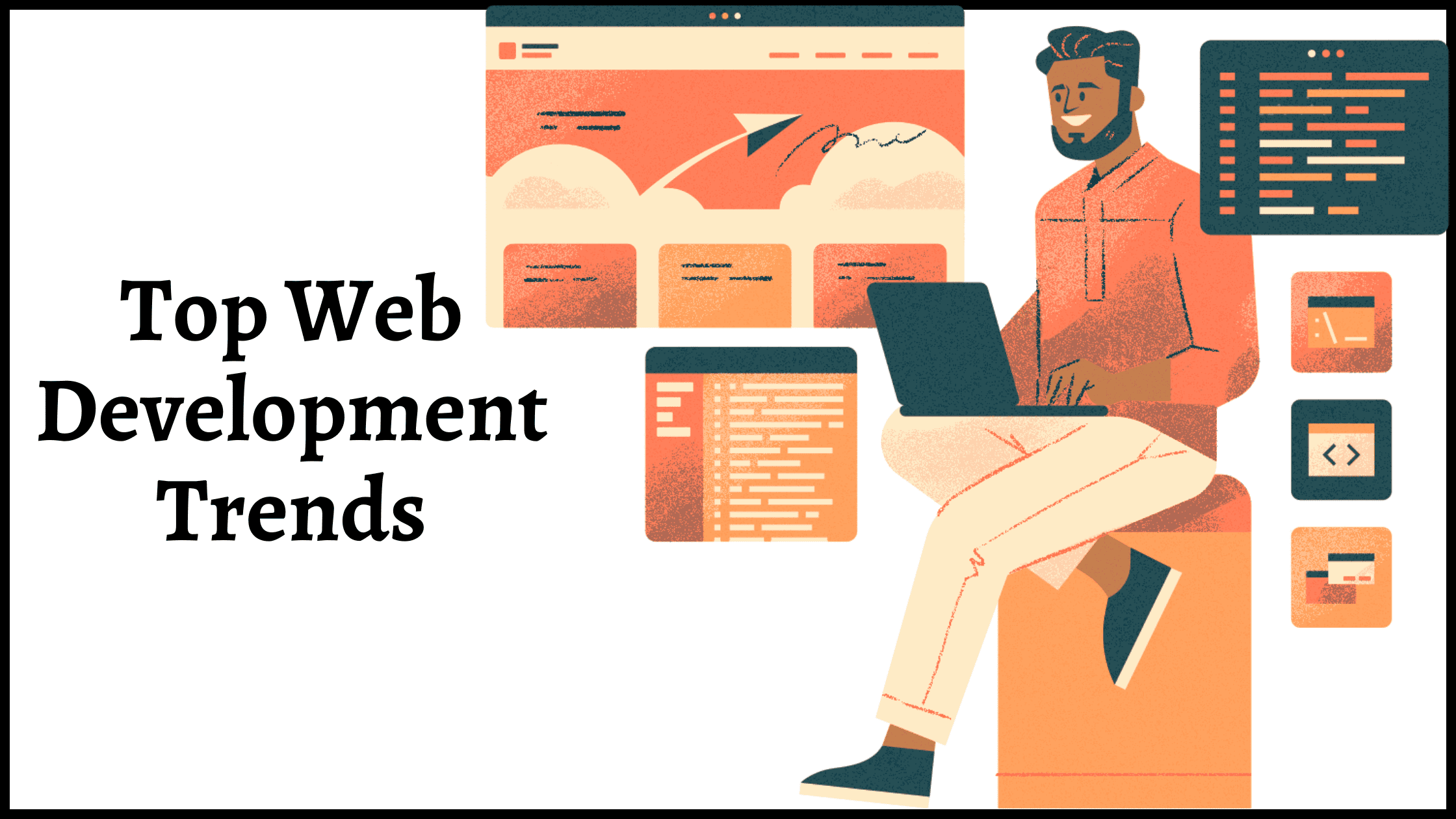
- Modern Web Development Trends Reshaping Online Experiences
- 1. AI-Powered Chatbots Enhance Real-Time Customer Experiences
- 2. Progressive Web Apps Deliver App-Like Speed
- 3. Core Web Vitals Improves Rankings and UX
- 4. Mobile First Indexing Drives UX and SEO Strategy
- 5. Headless CMS Architecture Powers Omnichannel Content Delivery
- 6. API-First Development Enables Modular Systems
- 7. Serverless Architecture Enables Cost-Effective Scaling
- 8. WebAssembly Delivers Near-Native Performance
- 9. Motion UI and Micro-Frontends Enhance Engagement
- 10. Voice Search Optimization Improves Discoverability
- 11. Hyper-Personalization in Web Apps Boosts User Engagement
- 12. AR with WebGPU Elevate Visual Experiences
- 13. Utility-First CSS Frameworks Speed Up UI Development
- 14. Dark Mode Design Enhances Visual Comfort and Modern Appeal
- 15. Sustainable Web Development Reduces Carbon Impact
- The Impact of Latest Web Development Trends on Businesses
- Key Business Impacts
- 1. Faster Revenue Growth Through High-Performance Websites
- 2. Lower Operational Costs With AI and Automation
- 3. Greater Mobile Market Capture Through Mobile-First Indexing
- 4. Higher Scalability and Lower Infrastructure Spending
- 5. Stronger Personalization and Customer Retention
- 6. Better Brand Trust and Compliance
- Conclusion
- Why Choose CSSChopper to Integrate Web Development Trends?
Web development is advancing rapidly. The expectations for speed, intelligence, security, and personalization have changed dramatically. Businesses now compete in an environment where users want instant experiences and search engines reward performance. This shift has accelerated the adoption of web development trends, influencing how future-ready websites are built, deployed, and scaled.
Digital transformation is driving this momentum, with 65 percent of companies investing in web development to accelerate it. The global web development market was worth USD 76.27 billion in 2025 and is projected to grow to USD 165.13 billion by 2035, with an annual growth rate of 8.03% during this period.
The above insights reveal that the future of web development is exciting, where performance, intelligence, and accessibility define success. In this blog, we will look at the current trends in website development shaping digital ecosystems in 2026.
Modern Web Development Trends Reshaping Online Experiences
Modern web development trends are transforming how users browse, interact, and engage online, creating faster, smarter, and more personalized digital experiences. Let’s look at them.
1. AI-Powered Chatbots Enhance Real-Time Customer Experiences
Enterprises are using AI in web development with AI-enhanced chatbots. It has become essential for enterprise websites. They improve customer satisfaction, automate support, and reduce manual workloads. With real-time learning and natural language processing, AI agents help brands deliver personalized experiences and respond more quickly. These virtual assistants improve trust and increase conversions across digital products.
Enterprise Use Cases
- Automated 24/7 customer support
- Intelligent lead capturing for B2B businesses
- Smart onboarding for SaaS and enterprise portals
Technical Best Practices
- Train NLP models with domain-specific data
- Use fallback logic to escalate complex issues
- Add continuous monitoring to reduce intent drift
2. Progressive Web Apps Deliver App-Like Speed
PWAs are among the best web technologies for helping businesses deliver fast, reliable, app-like experiences. They reduce loading time, work offline, and remove the need for separate native app development. PWAs increase engagement by providing a smooth experience even on slow networks.
Enterprise Use Cases
- Ecommerce checkout flows optimized for mobile
- Media apps requiring offline reading
- Global travel platforms with itinerary access
Technical Best Practices
- Enable service worker caching
- Build with app-shell architecture
- Optimize for PWA Lighthouse requirements
3. Core Web Vitals Improves Rankings and UX
Core Web Vitals optimization determines a website’s load speed, responsiveness, and visual stability. These metrics influence search performance, bounce rates, and overall user trust. Improving them is one of the most crucial web development current trends for brands focused on traffic and conversions.
Enterprise Use Cases
- High-volume ecommerce platforms
- Content-heavy publishing websites
- Interactive SaaS dashboards
Technical Best Practices
- Use WebP/AVIF image formats
- Reduce JavaScript execution time
- Apply server-side rendering for dynamic content
Core Web Vitals Summary Table
| Metric | What it Measures | Ideal Score |
| Largest Contentful Paint (LCP) | How quickly the largest content element on a page (image, banner, text block) loads. | < 2.5s |
| Interaction to Next Paint (INP) | How quickly the site responds to all interactions, not just the first one. | < 100ms |
| Cumulative Layout Shift (CLS) | How much the layout visually shifts while loading (buttons jumping, text moving) | < 0.1 |
4. Mobile First Indexing Drives UX and SEO Strategy
Google primarily evaluates websites based on their mobile versions. Mobile-First indexing shapes the latest web development trends because most traffic originates from smartphones. Mobile-first design improves accessibility, retention, and search rankings.
Enterprise Use Cases
- Mobile-heavy ecommerce stores
- Field service apps for on-the-go workers
- News and media sites with high mobile readership
Technical Best Practices
- Use responsive layouts and fluid grids
- Compress images for small screens
- Reduce heavy scripts for faster loading
5. Headless CMS Architecture Powers Omnichannel Content Delivery
Headless CMS architecture enables content delivery across multiple channels. It separates the front-end framework from the content management system, giving developers the freedom to use frameworks like React, Next.js, or Vue. Headless eCommerce solutions are ideal for enterprises managing large, dynamic ecosystems.
Enterprise Use Cases
- Multi-language content distribution
- Multi-brand experiences managed centrally
- Real-time updates for global websites
Technical Best Practices
- Define reusable structured content models
- Use GraphQL for predictable querying
- Integrate CDNs for global delivery
6. API-First Development Enables Modular Systems
API-First Development ensures systems are scalable and integration-ready from day one. It supports microservices, automation, and omnichannel delivery. API-first improves maintainability by reducing dependencies between front-end and back-end teams.
Enterprise Use Cases
- SaaS platforms with third-party integrations
- Omnichannel commerce systems
- CRM and ERP connectivity for enterprise workflows
Technical Best Practices
- Use OpenAPI for contract-first development
- Secure endpoints with OAuth2 or JWT
- Add throttling and versioning
API Approach Comparison Table
| Feature | API-First | Traditional |
| Integration | Fast | Slow |
| Scalability | High | Moderate |
| Maintainability | Strong | Limited |
7. Serverless Architecture Enables Cost-Effective Scaling
Serverless Architecture reduces infrastructure complexity and operational cost. It enables automatic scaling, making it ideal for event-driven workloads. This trend defines the future scope of web development for businesses seeking lean and efficient deployment models.
Enterprise Use Cases
- Inventory updates and order processing
- Real-time pipelines for analytics
- High-volume notifications and webhooks
Technical Best Practices
- Use event-driven design patterns
- Monitor cold starts
- Use logs, metrics, and tracing for observability
8. WebAssembly Delivers Near-Native Performance
WebAssembly enables high-performance applications such as video editors, CAD tools, and scientific calculators to run directly in browsers. It supports languages like Rust, Go, and C++, expanding what is possible on the web.
Enterprise Use Cases
- In-browser media editing tools
- Real-time data processing and simulations
- Complex mathematical and engineering applications
Technical Best Practices
- Use WASM for compute-heavy workloads
- Optimize memory
- Mix WASM with JavaScript for flexibility
9. Motion UI and Micro-Frontends Enhance Engagement
Motion UI enhances the user experience with intuitive animations. Micro-frontends allow large teams to ship independent modules without interfering with other parts of the product. Combining both drives performance and clarity across enterprise apps.
Enterprise Use Cases
- Large SaaS dashboards
- Ecommerce product browsing
- Multi-team enterprise web applications
Technical Best Practices
- Use lightweight CSS animations
- Maintain isolation between micro-frontends
- Share design tokens for consistency
10. Voice Search Optimization Improves Discoverability
As voice assistants grow in popularity, voice search optimization improves search visibility for conversational queries. Websites optimized for voice achieve better performance in natural-language search.
Enterprise Use Cases
- Local search and service listings
- Ecommerce catalog queries
- Customer support portals
Technical Best Practices
- Add structured data markup
- Optimize for question-intent keywords
- Improve page speed for quick responses
11. Hyper-Personalization in Web Apps Boosts User Engagement
Hyper-personalization uses real-time data and AI to adapt content and experiences. It increases conversion rates and improves retention. It is becoming a central part of the future of web development for product-led brands.
Enterprise Use Cases
- Behavior-based product feeds
- Personalized onboarding journeys
- Adaptive recommendations in B2B platforms
Technical Best Practices
- Track behavioral and intent signals
- Use ML models for segmentation
- Deliver dynamic content server-side
12. AR with WebGPU Elevate Visual Experiences
WebGPU enables high-performance 3D and AR experiences in browsers. It significantly improves rendering speed, visual quality, and interaction capabilities. It transforms ecommerce, education, entertainment, and product design experiences.
Enterprise Use Cases
- Virtual try-on for retail
- Interactive 3D product demos
- Web-based training simulations
Technical Best Practices
- Optimize shaders and asset pipelines
- Use progressive loading
- Provide fallback support for older devices
WebGL vs WebGPU Table
| Feature | WebGL | WebGPU |
| Performance | Moderate | High |
| Compute shaders | Limited | Supported |
| Use cases | Basic 3D | Advanced AR/3D |
13. Utility-First CSS Frameworks Speed Up UI Development
Frameworks like Tailwind CSS accelerate development with predefined utility classes. They improve consistency, reduce CSS bloat, and allow rapid prototyping across teams.
Enterprise Use Cases
- Multi-team design systems
- SaaS dashboards
- Rapid prototyping environments
Technical Best Practices
- Use PurgeCSS to clean unused utilities
- Build a token-driven design system
- Extend utility classes to match brand identity
14. Dark Mode Design Enhances Visual Comfort and Modern Appeal
Dark mode improves readability, reduces strain, and enhances visual comfort. It is now expected in modern UI design and is part of the latest web technologies.
Enterprise Use Cases
- Developer tools
- Media reading platforms
- Productivity apps
Technical Best Practices
- Use CSS custom properties
- Maintain accessible contrast ratios
- Support system-level theme detection
15. Sustainable Web Development Reduces Carbon Impact
Sustainability has become important for performance and brand responsibility. Efficient code, optimized assets, green hosting, and lower bandwidth usage reduce websites’ carbon footprints.
Enterprise Use Cases
- Large content-heavy websites
- Eco-conscious consumer brands
- High-traffic digital media portals
Technical Best Practices
- Use efficient hosting and CDNs
- Optimize assets and reduce network calls
- Implement long-term caching strategies
The Impact of Latest Web Development Trends on Businesses
New web development technologies are reshaping digital operations. Businesses are using an advanced tech stack to improve performance, reduce web development costs, increase conversions, and deliver frictionless customer experiences. The impact is measurable, data-backed, and transformative across every industry.
Key Business Impacts
1. Faster Revenue Growth Through High-Performance Websites
- Websites optimized for Core Web Vitals see up to 22% higher conversion rates (Google).
- PWAs reduce page load times by 65 percent, lifting mobile revenue significantly.
- Faster digital experiences translate into longer session durations and higher order values.
2. Lower Operational Costs With AI and Automation
- AI in web development reduces development effort by 25–30 percent.
- AI chatbots lower customer service costs by up to 40 percent while improving resolution speed.
- Automation accelerates QA cycles and reduces the cost of manual testing.
3. Greater Mobile Market Capture Through Mobile-First Indexing
- In 2026, over 73 percent of global web traffic will be mobile.
- Businesses prioritizing mobile-first Indexing see 18 percent higher search visibility.
- PWAs increase mobile engagement by 3x, especially in emerging markets.
4. Higher Scalability and Lower Infrastructure Spending
- Companies adopting serverless architecture cut infrastructure costs.
- WebAssembly enables complex apps to run in the browser, reducing backend load and cloud spend.
- API-First architecture accelerates product launches and decreases integration timelines.
5. Stronger Personalization and Customer Retention
- Hyper-personalized experiences increase returning user engagement by 28 percent.
- Real-time personalization boosts ecommerce conversion rates by 15–25 percent.
- Businesses using headless CMS and dynamic rendering deliver consistent omnichannel experiences.
6. Better Brand Trust and Compliance
- Sustainable web development lowers energy usage by 20 percent on average.
- Secure web development practices reduce breach risks and improve compliance readiness.
Conclusion
The web is evolving fast, and these web development trends define how modern digital products are built, optimized, and scaled. AI in web development, headless systems, PWAs, cloud-native engineering, and security-focused frameworks are no longer optional. They are foundational to performance, resilience, and long-term growth.
By adopting the latest web development trends, organizations can create faster, more innovative, and more future-ready digital platforms that deliver higher engagement and measurable business impact.
Why Choose CSSChopper to Integrate Web Development Trends?
CSSChopper is a trusted custom web development company for implementing advanced web development trends across global enterprises. Our team has delivered complex modernization projects for leading brands across ecommerce, finance, healthcare, retail, and technology.
We specialize in Headless CMS, PWAs, API-First development, serverless systems, and AI in web development. Our engineering expertise ensures high performance, accessibility, secure architectures, and scalable front-end ecosystems.
Whether you are building a new platform or modernizing an existing one, CSSChopper provides enterprise-grade solutions aligned with business goals and future-ready digital strategy.
Categories
Recent Posts
Popular Posts
- How to Choose a Reliable Offshore Development Partner?
- Transforming Web Development with HTMX’s Declarative Approach for Dynamic UIs
- Top 15 Ecommerce Growth Strategies to Maximize Sales in 2026
- What is B2B Web Design? Benefits, Best Practices, and Examples
- Why Your Conversion Funnel Needs a Composable Commerce Solution?