- What Is White Label Web Design?
- What Is White Labeling in Web Design?
- How Does White Label Web Design Work?
- White Label Web Design vs. Outsourcing Web Design
- What Are the Benefits of White Label Web Design?
- White Label Web Design Services You Can Offer
- White Label Digital Marketing Services
- White Label Web Design Pricing
- How Much Does White Label Web Design Cost?
- How to Start a White Label Web Design Business
- Should You Outsource Web Design to a White Label Agency?
- Choosing Affordable White Label Web Design Services
- Common Mistakes to Avoid
- Conclusion
Building websites has become a core service for agencies of all sizes. However, as client expectations continue to grow, many businesses struggle to keep up with increasing workloads, tight deadlines, and the demand for specialized skills. Hiring an in-house team is not always practical, especially for small and mid-sized agencies that need to stay flexible.
This is where white label web design comes into the picture. Instead of investing in additional staff or turning down projects, agencies can partner with experienced professionals who design and develop websites under their brand name. Clients receive high-quality results, while the agency maintains complete ownership of the customer relationship.
Today, white label web design services have become an effective solution for marketing agencies, branding firms, freelancers, consultants, and IT companies that want to expand their service offerings without increasing operational costs.
Whether you need complete website creation, website redesign, ongoing website maintenance services, or advanced website development services, a white label partner can help you deliver projects efficiently. In this guide, you’ll learn what is white label web design, how it works, its benefits, pricing considerations, and how agencies can use it to scale successfully.
What Is White Label Web Design?
One of the most common questions businesses ask is, what is white label web design?
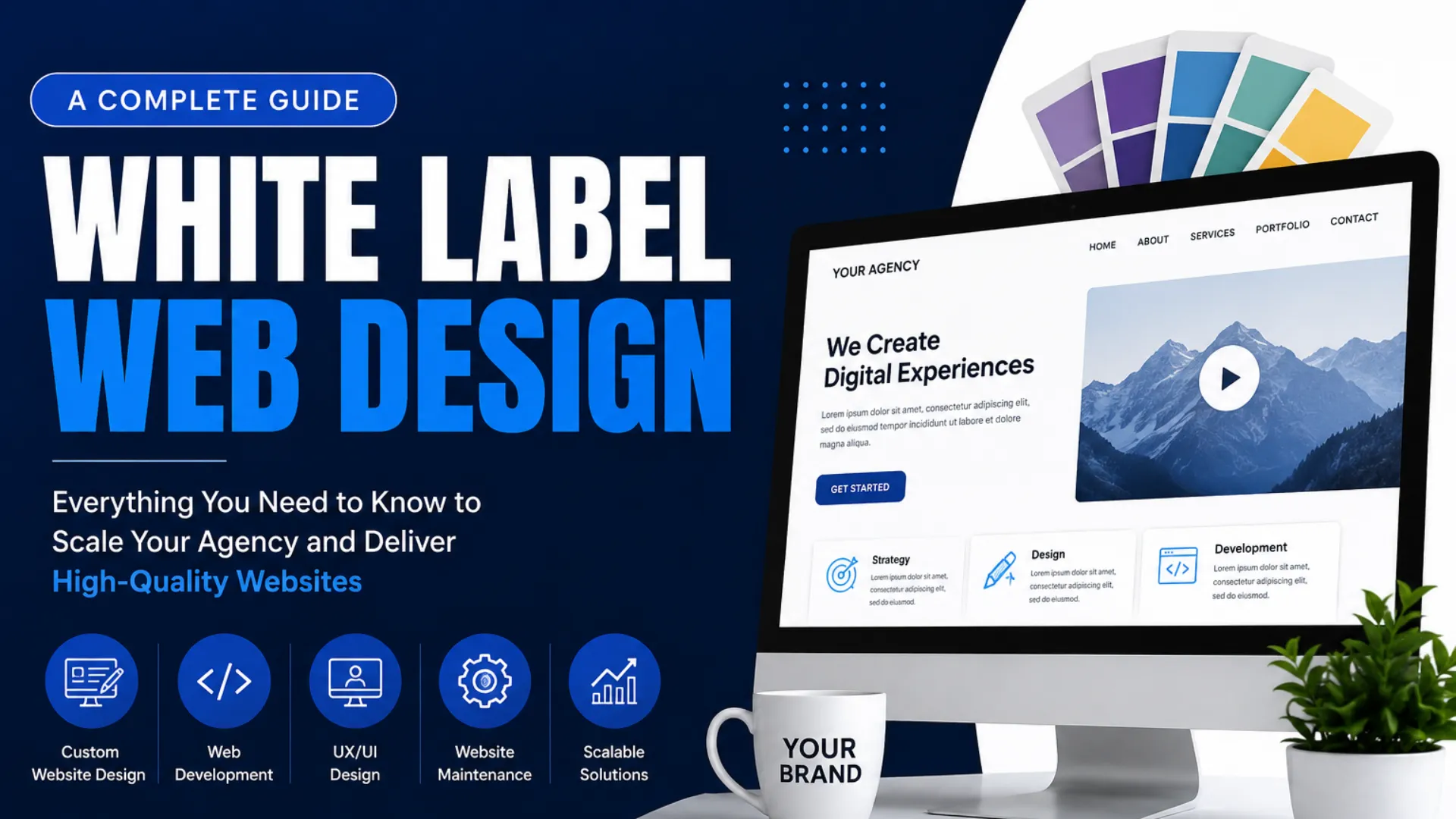
White label web design is a business model in which a specialized design or development company creates websites on behalf of another agency. The work is completed behind the scenes, allowing the client-facing agency to present the finished project under its own brand.
From the client’s perspective, the agency handles every aspect of the project. The white label provider remains invisible throughout the engagement. For example, a digital marketing agency wins a project to redesign a client’s website.
Instead of hiring designers and developers internally, the agency partners with a white label company that completes the work while following the agency’s branding, communication style, and quality standards.
The final website is delivered as if it were created entirely by the agency itself.
This approach allows businesses to expand their capabilities without increasing payroll or managing additional resources.
What Is White Labeling in Web Design?
To better understand the concept, it’s helpful to answer another common question: what is white labeling in web design? White labeling refers to delivering products or services created by one company under another company’s brand identity. In web design, this means the service provider remains anonymous while the agency receives full credit for the completed work.
Unlike subcontracting, where clients may know external developers are involved, white label partnerships are designed to remain completely transparent to the end customer. Everything from project communication and documentation to final deliverables can be customized to match the agency’s branding.
As a result, agencies can offer professional web solutions while maintaining a consistent brand experience.
How Does White Label Web Design Work?
Many agencies also wonder, how does white label web design work?
The process is relatively straightforward.
1. The agency acquires the client
Your agency handles marketing, sales, consultations, and project planning.
2. Requirements are shared
Project specifications, design preferences, branding guidelines, functionality requirements, and timelines are documented and shared with the white label partner.
3. Design and development begin
The white label team creates wireframes, visual designs, user interfaces, and develops the website according to the agreed specifications.
Depending on the project, this may include:
- Custom website design
- Responsive development
- CMS integration
- E-commerce functionality
- API integrations
- SEO-ready development
- Performance optimization
Many providers also specialize in white label web development, allowing agencies to offer advanced technical solutions without hiring developers internally.
4. Review and revisions
The agency reviews the work, requests revisions if necessary, and ensures everything aligns with client expectations.
5. Delivery to the client
The completed website is presented under the agency’s brand, with no visible involvement from the white label provider.
If ongoing support is required, the provider may continue delivering white label website maintenance, security updates, bug fixes, backups, and performance improvements while remaining behind the scenes.
White Label Web Design vs. Outsourcing Web Design
Businesses often compare white label vs outsourcing web design, but the two models are not identical.
| White Label Web Design | Traditional Outsourcing |
| Work is delivered under your agency’s brand | Third-party involvement may be visible |
| Long-term partnership | Often project-based |
| Consistent design standards | May vary by freelancer or vendor |
| Built for agencies | Suitable for businesses of all sizes |
| Client relationship remains with your agency | External communication may occur |
If you’re planning to outsource web design to a white label agency, you’re choosing a partnership specifically designed to strengthen your agency’s brand rather than simply delegating work. Traditional outsource web design services can still be useful for one-off projects, but white label partnerships typically offer greater consistency, scalability, and control.
What Are the Benefits of White Label Web Design?
Understanding what are the benefits of white label web design helps agencies determine whether this model aligns with their growth strategy.
Access to Specialized Expertise
White label providers often employ experienced designers, developers, UX specialists, and quality assurance professionals who stay current with industry best practices.
This enables agencies to deliver high-quality websites without recruiting a full in-house team.
Lower Operating Costs
Hiring designers, developers, project managers, and testers involves salaries, training, software licenses, and infrastructure costs.
Working with a white label partner allows agencies to pay only for the services they need.
Faster Project Delivery
Dedicated teams can complete projects more efficiently, allowing agencies to manage multiple client engagements simultaneously.
This improves turnaround times while maintaining quality.
Easier Business Growth
As your client base expands, a white label partner can handle increased workloads without requiring immediate hiring.
This flexibility makes it easier to scale operations sustainably.
Expanded Service Portfolio
Many providers offer more than design alone.
In addition to white label website design, agencies can provide:
- White label web development
- Custom CMS development
- E-commerce solutions
- Landing page creation
- Website redesign
- Technical SEO implementation
- Performance optimization
- Website migration
- Website maintenance services
This allows agencies to generate additional revenue while serving a broader range of client needs.
White Label Web Design Services You Can Offer
Modern agencies often go beyond basic website creation by partnering with providers that deliver comprehensive white label web design services.
Some of the most common offerings include:
White Label Website Design
Custom websites designed to match each client’s branding, goals, and target audience while maintaining responsive layouts across all devices.
White Label Web Development
Development services include front-end coding, back-end programming, CMS implementation, e-commerce functionality, custom integrations, and performance optimization.
These website development services enable agencies to support projects ranging from simple business websites to complex enterprise platforms.
White Label UX Design Services
User experience plays a significant role in website success.
Professional white label UX design services focus on improving navigation, accessibility, user journeys, and conversion rates through research-driven design decisions.
Website Redesign
Older websites often require updated layouts, improved performance, enhanced security, and modern user experiences. Offering website redesign services allows agencies to help clients refresh their online presence without rebuilding their business from scratch.
White Label Website Maintenance
A website requires continuous monitoring even after launch.
With white label website maintenance, agencies can provide ongoing updates, plugin management, backups, security monitoring, bug fixes, and performance improvements while the work is completed behind the scenes.
These recurring website maintenance services create predictable revenue while ensuring clients’ websites remain secure and up to date.
White Label Digital Marketing Services
Many providers also complement web design with white label digital marketing services, including SEO, PPC management, content marketing, email marketing, social media management, and conversion rate optimization.
Combining these services enables agencies to deliver complete digital solutions under a single brand.
White Label Web Design Packages
Every agency has different requirements, which is why most providers offer flexible white label web design packages. These packages are designed to accommodate businesses of different sizes, project scopes, and budgets.
While the exact offerings vary from one provider to another, common package options include:
Basic Website Package
This package is suitable for startups, consultants, and small businesses that need a professional online presence. It typically includes:
- Custom homepage and essential internal pages
- Responsive design
- Basic CMS setup
- Contact forms
- On-page SEO essentials
- Cross-browser compatibility
Business Website Package
Designed for growing businesses, this package often includes additional features such as:
- Custom page layouts
- Blog integration
- Service pages
- Lead generation forms
- Speed optimization
- Analytics integration
- Enhanced security features
E-commerce Package
Online stores require more advanced functionality. These packages usually include:
- Product catalog setup
- Shopping cart integration
- Payment gateway configuration
- Inventory management
- Customer account functionality
- Mobile optimization
Enterprise Solutions
Larger organizations often require fully customized solutions involving:
- Custom application development
- Third-party integrations
- Membership portals
- CRM connectivity
- Advanced security
- Multi-language support
- Dedicated project management
Many agencies also combine these packages with white label website maintenance, ensuring clients continue receiving updates, security patches, backups, and technical support after launch.
White Label Web Design Pricing
One of the most frequently asked questions is about white label web design pricing. There is no universal pricing model because every project differs in terms of complexity, features, technology stack, timeline, and customization.
Most providers use one of the following pricing models:
Fixed Project Pricing
Suitable for projects with clearly defined requirements.
Advantages include:
- Predictable budget
- Defined scope
- Easier project planning
Hourly Pricing
Ideal for ongoing development or projects with changing requirements.
This model offers flexibility but requires careful tracking of development hours.
Monthly Retainer
Many agencies prefer a monthly partnership that covers design requests, development tasks, maintenance, and technical support.
Retainers work particularly well for agencies managing multiple client websites throughout the year.
Dedicated Team Model
Some businesses hire an entire remote team that works exclusively on their projects.
This approach provides maximum flexibility and is often the preferred option for agencies experiencing consistent project demand.
How Much Does White Label Web Design Cost?
Another common question is, how much does white label web design cost?
The answer depends on several factors rather than a single fixed price.
These factors include:
- Number of pages
- Design complexity
- Custom functionality
- CMS platform
- E-commerce requirements
- Third-party integrations
- UX research
- Content migration
- Website redesign requirements
- Timeline
- Ongoing support requirements
A simple business website naturally costs less than a custom web application with advanced integrations. Similarly, projects involving extensive website development services or ongoing website maintenance services generally require a larger investment than a standard brochure website.
Rather than choosing the lowest-priced provider, agencies should evaluate overall value, technical expertise, communication, scalability, and quality assurance.
How to Start a White Label Web Design Business
Many entrepreneurs ask how to start a white label web design business because it allows them to build an agency without employing a large technical team.
The process begins with defining your business model.
Choose Your Niche
Rather than targeting every industry, consider specializing in sectors such as:
- Healthcare
- Real estate
- Legal services
- SaaS companies
- E-commerce
- Education
- Local businesses
Specialization often makes marketing more effective and improves client trust.
Build Reliable Partnerships
Your success depends heavily on the quality of your white label partner.
Look for providers with:
- Strong portfolios
- Proven technical expertise
- Transparent communication
- Reliable turnaround times
- Clear project management processes
- Quality assurance standards
Develop Your Brand
Although another company completes the work, your agency remains the public face of every project.
Invest in:
- Professional branding
- A strong website
- Case studies
- Client testimonials
- Marketing materials
Define Your Services
Offer a complete range of solutions instead of standalone web design.
These may include:
- White label web design
- White label web development
- Website redesign
- Website development services
- White label UX design services
- White label website maintenance
- SEO
- Content management
- Performance optimization
Providing comprehensive services increases revenue opportunities while improving client retention.
Create Efficient Workflows
Develop standardized processes for:
- Client onboarding
- Requirement gathering
- Design approvals
- Development reviews
- Testing
- Website launch
- Maintenance requests
Well-documented workflows reduce delays and improve consistency across projects.
Should You Outsource Web Design to a White Label Agency?
Many growing agencies eventually decide to outsource web design to a white label agency when project demand exceeds internal capacity.
This approach is particularly beneficial when:
- Your team is overloaded.
- You need specialized technical expertise.
- Hiring full-time employees isn’t financially practical.
- You want to expand service offerings quickly.
- Project timelines are becoming difficult to manage.
Unlike hiring freelancers for individual assignments, long-term white label partnerships create consistent quality standards and smoother collaboration.
Many agencies also use outsourced web design services to handle seasonal increases in workload without expanding permanent staff.
Choosing Affordable White Label Web Design Services
Finding affordable white label web design services does not simply mean selecting the lowest quote.
Instead, evaluate providers based on factors such as:
- Industry experience
- Portfolio quality
- Technical capabilities
- Communication process
- Revision policy
- Delivery timelines
- Security standards
- Post-launch support
- Scalability
- Client references
An experienced provider may charge slightly more initially but often delivers greater long-term value through fewer revisions, improved quality, and better client satisfaction.
Common Mistakes to Avoid
Whether you’re launching your first partnership or scaling an established agency, avoiding common mistakes can improve project outcomes.
Some of the most frequent issues include:
- Choosing providers based solely on price
- Failing to define project requirements clearly
- Ignoring quality assurance before delivery
- Overpromising unrealistic timelines
- Neglecting ongoing website maintenance
- Poor communication between agency and provider
- Not documenting revision processes
Establishing clear expectations from the beginning helps create successful long-term partnerships.
Conclusion
As businesses continue investing in digital experiences, agencies are under increasing pressure to deliver high-quality websites while controlling costs and meeting tight deadlines. White label web design provides a practical solution by allowing agencies to expand their capabilities without building large in-house teams.
From custom website creation and white-label web development to website redesign, white-label UX design services, and white-label website maintenance, agencies can offer a complete range of solutions under their own brand.
Whether you’re looking to scale your agency, improve project delivery, or add recurring revenue through maintenance and support, partnering with the right provider can help you serve more clients while maintaining quality and consistency. The key is to choose a partner that aligns with your standards, communicates effectively, and can grow alongside your business.
Tags
Categories
Recent Posts
Popular Posts
- How to Choose a Reliable Offshore Development Partner?
- Transforming Web Development with HTMX’s Declarative Approach for Dynamic UIs
- Top 15 Ecommerce Growth Strategies to Maximize Sales in 2026
- What is B2B Web Design? Benefits, Best Practices, and Examples
- Why Your Conversion Funnel Needs a Composable Commerce Solution?