- Wix vs WordPress: The Core Difference
- Ease of Use: Which One Is Simpler?
- Design Flexibility
- Wix vs WordPress Cost Comparison
- SEO: Which Platform Performs Better?
- Ecommerce Website Development
- Security and Maintenance
- Pros and Cons of Wix vs WordPress
- Choosing a Web Development Company
- Should You Hire a WordPress Developer?
- So, Wix or WordPress?
- Final Thoughts
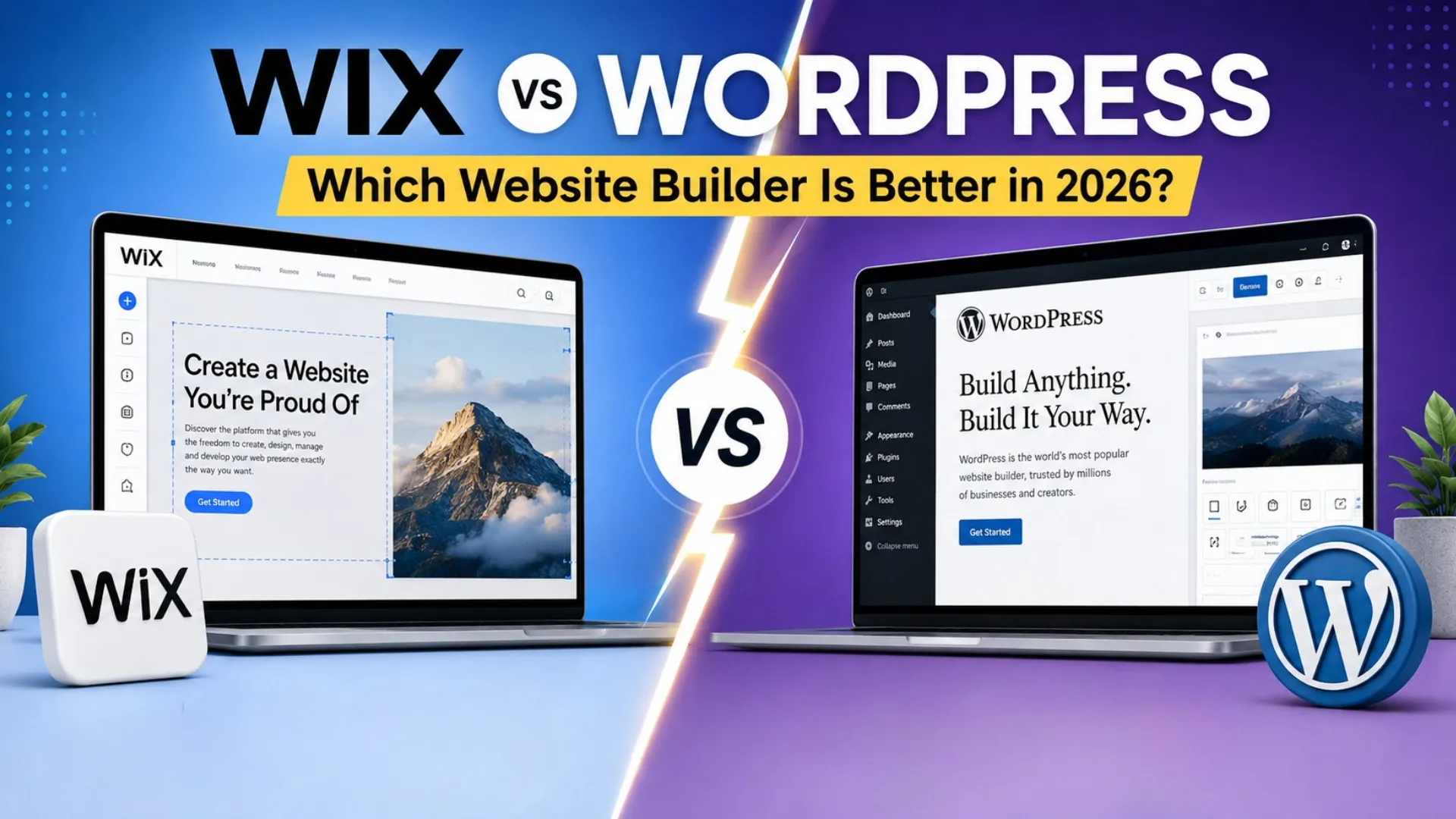
Building a website in 2026 is weirdly easier and harder at the same time. Easier because you no longer need to know coding just to launch a decent-looking site. Harder because now there are too many options, and everybody keeps saying their platform is the best. That’s where the whole Wix vs WordPress debate starts.
Some people want full control. Others just want a website that works without giving them a headache at 2 AM because a plugin broke something. And honestly, both are fair. If you are trying to decide between WordPress vs Wix, this guide will help you understand what actually matters in real-world website development. Not just marketing claims. Let’s get into it.
Wix vs WordPress: The Core Difference
The biggest difference between Wix and WordPress is pretty simple. Wix is an all-in-one website builder. Hosting, templates, security, drag-and-drop editing, updates. Everything is bundled together. WordPress is more flexible. You get full ownership and customization, but you also manage more things yourself. That flexibility is exactly why WordPress powers such a huge portion of the internet today.
So when people ask “which is better Wix or WordPress,” the answer usually depends on what kind of website they are trying to build.
- If you want speed and simplicity, Wix feels easier.
- If you want long-term scalability and deeper customization, WordPress usually wins.
Ease of Use: Which One Is Simpler?
Let’s be honest. Wix is probably the easiest website builder for beginners right now. You sign up, pick a template, drag things around, and your site is basically ready. It feels smooth. Almost fun sometimes. You do not need technical skills for basic Wix website development.
That’s a big reason small businesses and freelancers like it.
WordPress is different.
Creating a WordPress website takes a little more setup. You need hosting, themes, plugins, and some understanding of how everything connects. It’s not impossible at all. But there is definitely a learning curve.
If somebody asks me: “Should I use Wix or WordPress if I’ve never built a website before?” I’d probably say Wix. But if they ask: “Which platform gives me more freedom later?” Then it’s WordPress without much debate.
Design Flexibility
This is where WordPress starts pulling ahead. Wix templates look polished, and for basic business sites they are more than enough. Restaurants, salons, photographers, portfolios. Wix handles these really well. But WordPress customization goes much deeper.
You can completely redesign almost every part of the site. There are thousands of themes and plugins available. You can also hire a WordPress developer if you want something custom-built. That matters for growing businesses.
A lot of companies eventually outgrow simple drag-and-drop builders because they need custom functionality, advanced SEO setups, membership systems, booking integrations, or custom ecommerce flows.
That is why many businesses eventually move from Wix to WordPress. Not always. But pretty often.
Wix vs WordPress Cost Comparison
Now let’s talk money because this is where people get confused. The Wix vs WordPress cost conversation is not as straightforward as people think.
Wix Pricing
Wix has predictable pricing. You pay monthly, and most things are included:
- Hosting
- Security
- Templates
- Support
- Maintenance
The Wix website development cost is easier to estimate because there are fewer moving parts. For a small business website, costs usually stay manageable. But there’s a catch. As your needs grow, premium apps and advanced features start increasing the price. And since you are inside the Wix ecosystem, you have less flexibility with hosting and infrastructure choices.
WordPress Pricing
WordPress itself is technically free. But your total WordPress website development cost depends on:
- Hosting provider
- Premium themes
- Plugins
- Developer costs
- Maintenance
If you create a WordPress website yourself, costs can stay low. But businesses often hire WordPress developers or agencies for professional setups, especially for ecommerce website development. That increases the budget quickly.
Still, WordPress gives more pricing flexibility long term because you control the ecosystem.
SEO: Which Platform Performs Better?
SEO is probably one of the biggest reasons businesses choose WordPress. WordPress gives deeper control over technical SEO.
You can customize:
- URLs
- Schema markup
- Meta data
- Site speed optimization
- Advanced SEO plugins
- Redirects
- Internal linking structures
For content-heavy websites, blogs, affiliate sites, and large business websites, WordPress is usually stronger.
Wix has improved a lot, though. A few years ago, Wix SEO had a pretty bad reputation. In 2026, it’s honestly much better than people think. You can still rank websites well using Wix. But WordPress still feels more powerful for advanced optimization. Especially if SEO traffic is your main growth strategy.
Ecommerce Website Development
If you are building an online store, the conversation changes a bit. Wix ecommerce works well for smaller stores. It’s simple, visually clean, and beginner-friendly. But larger ecommerce website development projects usually lean toward WordPress with WooCommerce. Why?
Because WooCommerce is insanely customizable. You can scale products, integrate advanced payment systems, create custom checkout experiences, and connect almost any tool imaginable. That flexibility matters when your business grows.
A lot of serious ecommerce brands eventually prefer WordPress because they want more ownership and scalability. Still, not every business needs that complexity. Some people just want to sell 20 products online without dealing with plugin conflicts. For them, Wix can actually be the better option.
Security and Maintenance
This is one area where Wix feels less stressful. Wix handles updates, security patches, hosting maintenance, backups, and infrastructure automatically. You barely think about it.
WordPress requires more responsibility.
You need to update plugins, monitor security, and maintain the website regularly. Now, that does not mean WordPress is insecure. A properly maintained WordPress website can be extremely secure. But maintenance matters.
That’s why businesses often work with a WordPress Development Company or an ongoing Website Development services provider to manage updates and technical support.
Pros and Cons of Wix vs WordPress
Let’s simplify things.
Wix Pros
- Very beginner-friendly
- Fast setup process
- Built-in hosting and security
- Easy visual editor
- Good for small business websites
Wix Cons
- Less flexibility
- Limited advanced customization
- Harder to migrate later
- Can become expensive with premium apps
WordPress Pros
- Extremely customizable
- Better scalability
- Strong SEO flexibility
- Huge plugin ecosystem
- Ideal for content-heavy and business websites
WordPress Cons
- Slight learning curve
- Requires maintenance
- Plugin conflicts can happen
- Setup takes longer
That’s basically the real difference between Wix and WordPress in practical terms.
Choosing a Web Development Company
A lot of businesses eventually realize platform choice is only part of the equation. The bigger factor is who builds the site properly. A bad developer can make both Wix and WordPress frustrating. A good team can make either platform perform really well.
If you are choosing a web development company, look for things like:
- Real portfolio examples
- SEO understanding
- Website speed optimization
- Post-launch support
- Experience in ecommerce website development
- Transparent pricing
And honestly, communication matters more than people think. Some agencies throw technical jargon everywhere and make simple things sound complicated. That usually becomes painful later.
Should You Hire a WordPress Developer?
If your project is more advanced, then yes, probably. When businesses need custom integrations, performance optimization, advanced SEO architecture, or scalable ecommerce systems, it makes sense to hire a WordPress developer.
Especially for:
- Large ecommerce websites
- Membership platforms
- Booking systems
- Custom portals
- Enterprise blogs
- Multi-location business websites
For smaller projects though, DIY WordPress is still very possible in 2026. AI tools, visual builders, and better hosting platforms have made WordPress much easier than it used to be. Still not as beginner-friendly as Wix though. Not even close.
So, Wix or WordPress?
This is the part everybody skips around, but here’s the honest answer.
Choose Wix if:
- You want simplicity
- You need a website quickly
- You do not want technical maintenance
- You are building a small business or portfolio site
- You value convenience over customization
Choose WordPress if:
- You care about long-term scalability
- SEO is a major priority
- You want full ownership
- You plan to expand functionality later
- You are serious about content or ecommerce growth
For most beginners, Wix feels easier initially. For most growing businesses, WordPress usually becomes the stronger long-term choice. That’s why the Wix vs WordPress comparison never really dies. Both platforms solve different problems. And honestly, neither one is perfect.
Final Thoughts
The “Wix or WordPress” decision is less about which platform is universally better and more about what kind of website you actually need. People sometimes overcomplicate this.
- If your goal is launching a clean website fast without dealing with technical stuff, Wix is genuinely solid.
- If your goal is building something scalable with deeper control, WordPress still dominates for a reason.
It’s flexible, powerful, and honestly kind of hard to outgrow. That said, the best website platform is the one you will actually use consistently. Because even the most advanced website means nothing if it never gets updated, optimized, or properly maintained.
Tags
Categories
Recent Posts
Popular Posts
- How to Choose a Reliable Offshore Development Partner?
- Transforming Web Development with HTMX’s Declarative Approach for Dynamic UIs
- Top 15 Ecommerce Growth Strategies to Maximize Sales in 2026
- What is B2B Web Design? Benefits, Best Practices, and Examples
- Why Your Conversion Funnel Needs a Composable Commerce Solution?