- What is a Multi-Vendor eCommerce Marketplace?
- How Does a Multi-Vendor Marketplace Work?
- Popular Multi Vendor Marketplace Examples You Can Learn From
- Best Multi-Vendor eCommerce Platforms to Build Your Marketplace
- Choosing the Best Multi-Vendor eCommerce Platform for Your Business
- B2B Multi-Vendor eCommerce Marketplace Development: What Makes It Different
- Features Required in a Multi-Vendor eCommerce Marketplace
- Multi-Vendor eCommerce Marketplace Development Process (Step-by-Step)
- Multi-Vendor Marketplace App Development Cost Breakdown
- Why Hire a Professional eCommerce Marketplace Development Company
- When Should You Hire eCommerce Marketplace Developers?
- How Can CSSChopper Help You with Multi-Vendor eCommerce Marketplace Development?
Multi-vendor marketplaces are reshaping how digital commerce scales. Instead of managing inventory alone, businesses are building platforms that enable multiple sellers to list, sell, and fulfill orders within a single ecosystem. This model reduces inventory risk, accelerates product expansion, and creates strong network effects.
The growth backs this shift. According to Statista, global marketplace platforms now account for over 60% of total online sales worldwide, driven by platforms that efficiently aggregate demand and supply. Source: Statista Marketplace Report.
For startups, enterprises, and B2B brands, multi-vendor ecommerce marketplace development is no longer an experiment. It is a proven growth strategy. Whether you are enabling third-party sellers, distributors, or service providers, marketplaces unlock scale without linear operational expenses.
This guide breaks down how multi-vendor marketplaces work, platform choices, costs, and best practices, so you can make informed, ROI-driven decisions.
What is a Multi-Vendor eCommerce Marketplace?
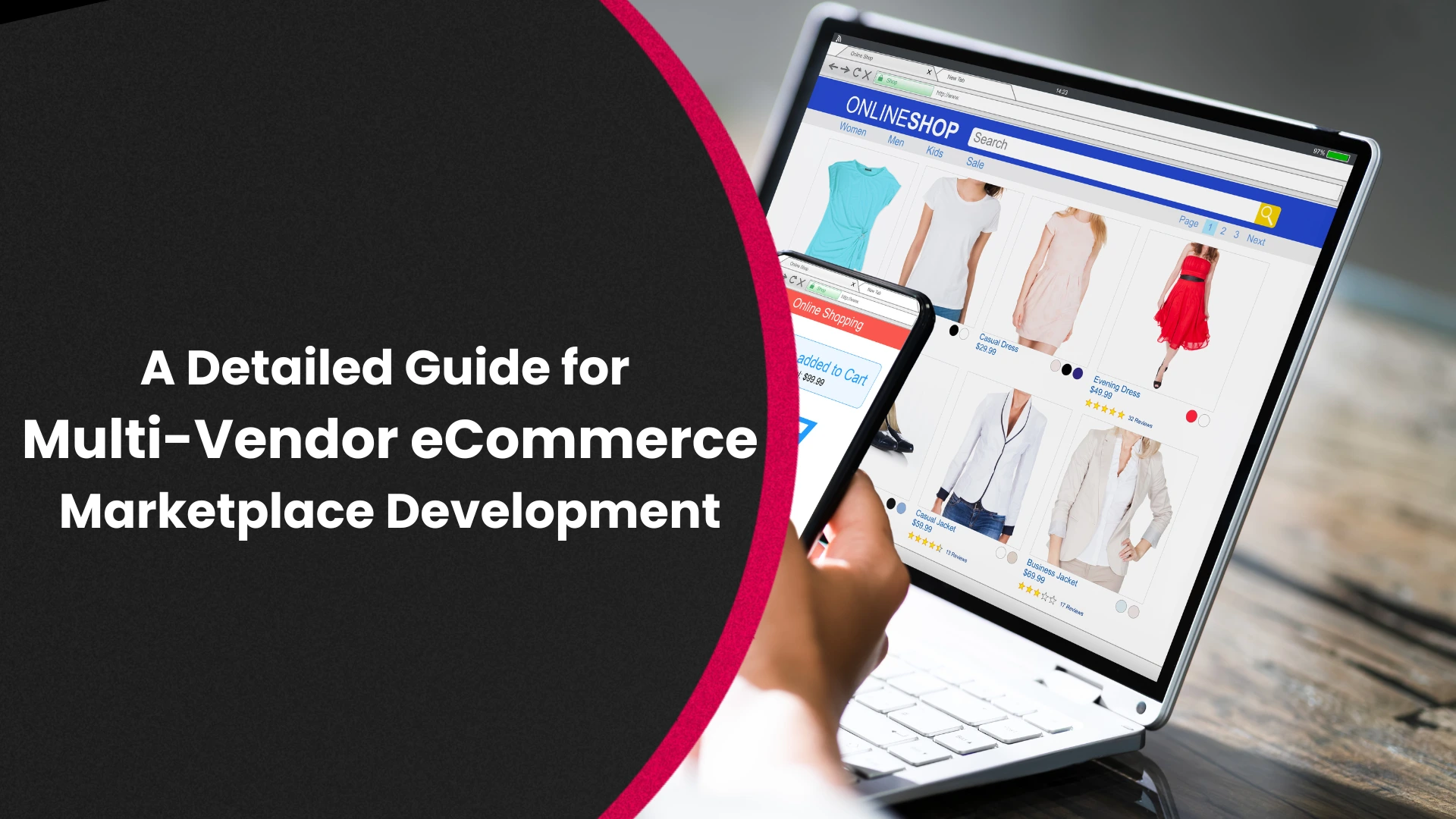
A multi-vendor ecommerce platform is a digital marketplace where multiple independent sellers can register, list products or services, and sell to customers through a centralized storefront managed by a single marketplace owner.
Unlike traditional eCommerce stores:
- Vendors manage their own catalogs and inventory
- The marketplace owner controls commissions, rules, and user experience.
- Customers get more variety, pricing competition, and convenience.
Core participants:
- Marketplace Admin: Owns the platform, sets policies, earns commissions
- Vendors: List and fulfill products or services
- Customers: Browse, compare, and purchase from multiple sellers
This model works across B2C, B2B, and hybrid commerce ecosystems.
How Does a Multi-Vendor Marketplace Work?
Understanding how to build a multi vendor marketplace starts with understanding its workflow. While features vary by business model, the core flow remains consistent.
Typical marketplace workflow:
- Vendor onboarding with verification and approvals
- Product listing with pricing, inventory, and shipping rules
- Customer places a single or multi-vendor order
- Platform splits payments and calculates commissions
- Vendors fulfill orders while the admin monitors quality
Key operational components:
- Centralized order management
- Automated commission calculation
- Secure payment escrow and settlements
- Vendor performance tracking
Well-designed workflows reduce disputes, improve vendor retention, and protect customer trust.
Popular Multi Vendor Marketplace Examples You Can Learn From
Looking at real-world examples of multi-vendor marketplaces helps define what works and why.
Common marketplace models:
- B2C Product Marketplaces: Large catalogs, competitive pricing, fast fulfillment
- B2B Marketplaces: Bulk ordering, negotiated pricing, account-based access
- Niche Marketplaces: Focused categories like fashion, services, rentals, or digital goods
Why these models succeed:
- Strong vendor onboarding standards
- Clear commission and payout rules
- Scalable technology infrastructure
- Continuous platform optimization
The takeaway is simple. Marketplaces succeed when technology, governance, and incentives are aligned.
Best Multi-Vendor eCommerce Platforms to Build Your Marketplace
Choosing the best ecommerce platform for multi vendor businesses depends on your scalability goals, customization needs, and ownership preferences.
| Platform Type | Best For | Pros | Limitations |
| SaaS Marketplaces | Fast launch | Low upfront cost, quick setup | Limited customization |
| Open-Source Platforms | Growing marketplaces | Full control, flexibility | Requires technical expertise |
| Headless Commerce | Enterprise scale | High performance, omnichannel | Higher initial investment |
Many businesses evaluate the best platforms for multi-vendor ecommerce website development based on long-term flexibility rather than short-term cost savings. If platform selection feels overwhelming, working with an experienced marketplace team helps avoid expensive rebuilds later.
Choosing the Best Multi-Vendor eCommerce Platform for Your Business
Selecting the best multi vendor ecommerce platform is not about popularity. It is about alignment with your business model, growth plans, and operational complexity.
Key decision factors:
- Business type: B2C, B2B, or hybrid marketplace
- Customization needs: Workflows, commissions, vendor rules
- Scalability: Number of vendors, products, and transactions
- Ownership: Data control and platform extensibility
For example, SaaS platforms work well for MVPs, while open-source or headless architectures suit long-term, enterprise-grade marketplaces. Choosing the wrong platform early often leads to costly migrations later. A technical feasibility assessment helps you avoid that risk.
B2B Multi-Vendor eCommerce Marketplace Development: What Makes It Different
B2B marketplaces operate very differently from consumer platforms. This is why many enterprises work with a specialized B2B ecommerce marketplace website development company rather than adapting B2C tools.
Modern B2B ecommerce platforms must support:
- Account-based pricing and contracts
- Bulk ordering and minimum order quantities
- RFQs and negotiated pricing workflows
- Role-based access for buyers and sellers
- ERP, CRM, and procurement system integrations
B2B marketplaces focus less on impulse buying and more on operational efficiency, long-term vendor relationships, and transaction reliability.
Features Required in a Multi-Vendor eCommerce Marketplace
A scalable multi-vendor marketplace is not defined by how many vendors it has on day one. It is defined by how efficiently it can onboard, manage, and grow vendors without increasing operational overhead. Feature planning plays a direct role in vendor retention, customer trust, and long-term profitability.
Below are the core feature categories every future-ready marketplace must include.
Vendor Management & Onboarding
Vendor experience determines marketplace supply growth. A complicated or manual onboarding process discourages quality sellers.
Key capabilities:
- Self-service vendor registration and profile management
- Admin-led approval workflows and document verification
- Role-based access for vendor teams
- Vendor-level settings for shipping, taxes, and returns
Well-designed onboarding reduces admin workload and accelerates marketplace expansion.
Product & Inventory Management
As vendors grow, inventory accuracy becomes critical to customer trust.
Must-have features:
- Bulk product uploads and updates
- Variant and SKU-level inventory tracking
- Real-time stock synchronization
- Category and attribute management by admin
Automation here prevents overselling and reduces order disputes.
Order Management & Fulfillment
Multi-vendor orders introduce complexity. The platform must handle this without friction.
Core requirements:
- Automatic order splitting by vendor
- Vendor-specific fulfillment workflows
- Shipment tracking and delivery notifications
- Return, refund, and dispute handling
Clear order visibility for all stakeholders improves customer satisfaction.
Commission, Payments & Payouts
This is the financial backbone of the marketplace.
Essential functionalities:
- Flexible commission models (fixed, percentage, tiered)
- Secure payment gateway integrations
- Automated vendor payouts and settlement cycles
- Transaction history and financial reports
Transparent payouts build vendor trust and reduce churn.
Search, Discovery & User Experience
Customers expect marketplace-level discovery, not basic store search.
Key UX features:
- Advanced search with filters and sorting
- Vendor storefront pages
- Product comparison tools
- Personalized recommendations
Better discovery directly improves conversion rates.
Reviews, Ratings & Quality Control
Quality assurance protects the brand reputation of the marketplace owner.
Quality-focused features:
- Vendor and product reviews
- Admin moderation controls
- Dispute resolution workflows
- Performance scoring for vendors
High-performing marketplaces actively manage vendor quality, not just supply.
Analytics, Reporting & Admin Controls
Scalability depends on data-driven decisions.
Analytics capabilities should include:
- Vendor performance dashboards
- Sales, commission, and revenue reports
- Customer behavior insights
- Platform health and growth metrics
These insights help optimize commissions, promotions, and vendor policies.
Security, Compliance & Performance
Trust is non-negotiable in marketplaces handling multi-party transactions.
Critical safeguards:
- Secure authentication and access control
- PCI-compliant payment processing
- Data encryption and fraud prevention
- Performance optimization for high traffic
Security and performance issues directly impact marketplace credibility.
Multi-Vendor eCommerce Marketplace Development Process (Step-by-Step)
Successful marketplaces are not built in a single sprint. They are developed through a phased, strategic process that balances speed, scalability, and risk management. Professional multi vendor marketplace development services follow a structured lifecycle to avoid rework and technical debt.
Step 1: Discovery & Business Strategy
This phase defines the foundation of the marketplace.
Activities include:
- Marketplace business model validation
- Revenue and commission strategy
- Target audience and vendor profiling
- Compliance and regional regulations
Skipping this phase often leads to misaligned features and cost overruns.
Step 2: UX/UI Design & Journey Mapping
User experience determines adoption on both sides of the marketplace.
Focus areas:
- Customer browsing and checkout flow
- Vendor onboarding and dashboard design
- Admin workflows and control panels
- Mobile-first and accessibility considerations
Clear journeys reduce friction and support faster scaling.
Step 3: Platform & Technology Selection
Technology choices impact long-term flexibility.
Decisions made here:
- SaaS vs open-source vs headless architecture
- Database and infrastructure planning
- Third-party services and integrations
- Scalability and performance benchmarks
This step ensures the platform can grow without costly rebuilds.
Step 4: Custom Development & Integrations
This is where the marketplace comes to life.
Development scope includes:
- Core marketplace features
- Payment, shipping, and tax integrations
- Vendor management modules
- API and third-party system integrations
Modular development allows features to evolve over time.
Step 5: Testing, Security & Quality Assurance
Marketplaces must be stable from day one.
Testing focuses on:
- Functional and regression testing
- Load and performance testing
- Security and vulnerability assessments
- Payment and settlement validation
This phase prevents revenue-impacting issues post-launch.
Step 6: Launch, Monitoring & Optimization
Launch is the beginning, not the end.
Post-launch activities include:
- Performance monitoring and bug fixes
- Vendor onboarding support
- Feature enhancements based on feedback
- Continuous optimization and scaling
Successful marketplaces evolve continuously with data and user behavior.
Multi-Vendor Marketplace App Development Cost Breakdown
The cost of marketplace app development varies significantly based on complexity, features, and platform choice.
Estimated cost range (App-focused):
| App Type | Estimated Cost Range |
| MVP Marketplace App | $25,000 – $45,000 |
| Mid-Scale Marketplace App | $50,000 – $90,000 |
| Enterprise Marketplace App | $100,000+ |
Key cost drivers include:
- Vendor onboarding workflows
- Payment gateway complexity
- Real-time notifications
- Security and compliance layers
Apps typically increase engagement but require a higher upfront investment than a web-only marketplace.
Why Hire a Professional eCommerce Marketplace Development Company
Building a multi-vendor marketplace is not the same as launching a standard online store. The architecture, workflows, and integrations are significantly more complex. That is why many businesses choose to work with a specialized ecommerce marketplace development agency rather than rely on generic development teams.
Key reasons to work with experts:
- Architecture-first approach: Ensures scalability from day one
- Reduced technical risk: Proven workflows for payments, commissions, and vendor management
- Faster time to market: Predefined frameworks and best practices
- Long-term cost control: Avoids expensive rework and migrations
When choosing an ecommerce development company, experience with real-world marketplace challenges matters more than familiarity with tools. A discovery-led engagement helps validate feasibility before committing to full-scale development.
When Should You Hire eCommerce Marketplace Developers?
Many businesses delay hiring specialists until problems appear. This often increases costs and slows growth. Knowing when to hire multi-vendor marketplace developers can prevent these issues.
Ideal scenarios to bring in experts:
- You are planning an MVP marketplace and need rapid validation
- Your existing marketplace struggles with performance or scaling
- You want to add advanced vendor, commission, or B2B features
- You are modernizing a legacy marketplace platform
An experienced ecommerce development company helps align technology with business goals rather than reacting to issues later.
How Can CSSChopper Help You with Multi-Vendor eCommerce Marketplace Development?
CSSChopper supports businesses at every stage of marketplace growth, from idea validation to enterprise-scale platforms. The focus is not just development but long-term marketplace success.
How we add value:
Custom marketplace strategy: Tailored for B2C, B2B, or hybrid models
- Platform-agnostic expertise: SaaS, open-source, and headless solutions
- Scalable architecture: Built to support vendor and transaction growth
- Secure systems: Payment, commission, and role-based access control
- Post-launch support: Continuous optimization, upgrades, and scaling
Rather than offering one-size-fits-all solutions, we align technology decisions with revenue goals, vendor retention, and operational efficiency. If you are planning a multi-vendor eCommerce marketplace development, contact us to clarify feasibility, costs, and timelines before you invest.
Categories
Recent Posts
Popular Posts
- How to Choose a Reliable Offshore Development Partner?
- Transforming Web Development with HTMX’s Declarative Approach for Dynamic UIs
- Top 15 Ecommerce Growth Strategies to Maximize Sales in 2026
- What is B2B Web Design? Benefits, Best Practices, and Examples
- Why Your Conversion Funnel Needs a Composable Commerce Solution?