- What is a B2B eCommerce Platform? (Beginner-Friendly Overview)
- A Quick B2B eCommerce Platform Comparison Table
- Detailed Reviews of the Best B2B eCommerce Platforms
- 3. BigCommerce B2B Edition
- B2B eCommerce Features Every Business Should Look For
- How to Choose the Right B2B eCommerce Platform (Expert Decision Guide)
- Step i. Start With Your Digital Goals
- Step ii. Understand Your Catalog and Pricing Complexity
- Step iii. Consider Your Industry’s Unique Requirements
- Step iv. Choose the Technology Model That Fits You
- Step v. Check Integration Compatibility
- Step vi. Plan Your Budget Carefully
- Step vii. Test Before You Commit
- A Comprehensive B2B eCommerce Store Cost Breakdown
- B2B eCommerce Platform Development Trends Shaping 2026 & Beyond
- Which B2B Ecommerce Platform Should You Choose?
The B2B commerce environment is transforming faster than ever. Buyers now expect the same convenience, speed, and transparency they experience in B2C, pushing companies to modernize their digital buying experiences.
According to Grand View Research, the global B2B eCommerce market was valued at $18.67 trillion in 2023 and is expected to reach around $57.58 trillion by 2030. Global transactions are projected to reach new highs as more organizations leverage an AI-powered B2B eCommerce platform. They are shifting from manual processes to online ordering, digital catalogs, and automated workflows.
This acceleration is driven by rising demand for personalized buying journeys, contract-based pricing, and seamless repeat ordering. At the same time, businesses are adopting automation to reduce operational costs and improve accuracy across procurement, inventory, and sales operations. In fact, self-service portals, AI-enhanced recommendations, and mobile-first ordering are the main drivers for staying competitive.
In this blog, we will discuss how the top B2B eCommerce platforms have become the core infrastructure enabling companies to scale. Additionally, we will provide a detailed comparison of B2B eCommerce websites, their features, pros and cons, and cost breakdowns to support informed decision-making.
What is a B2B eCommerce Platform? (Beginner-Friendly Overview)
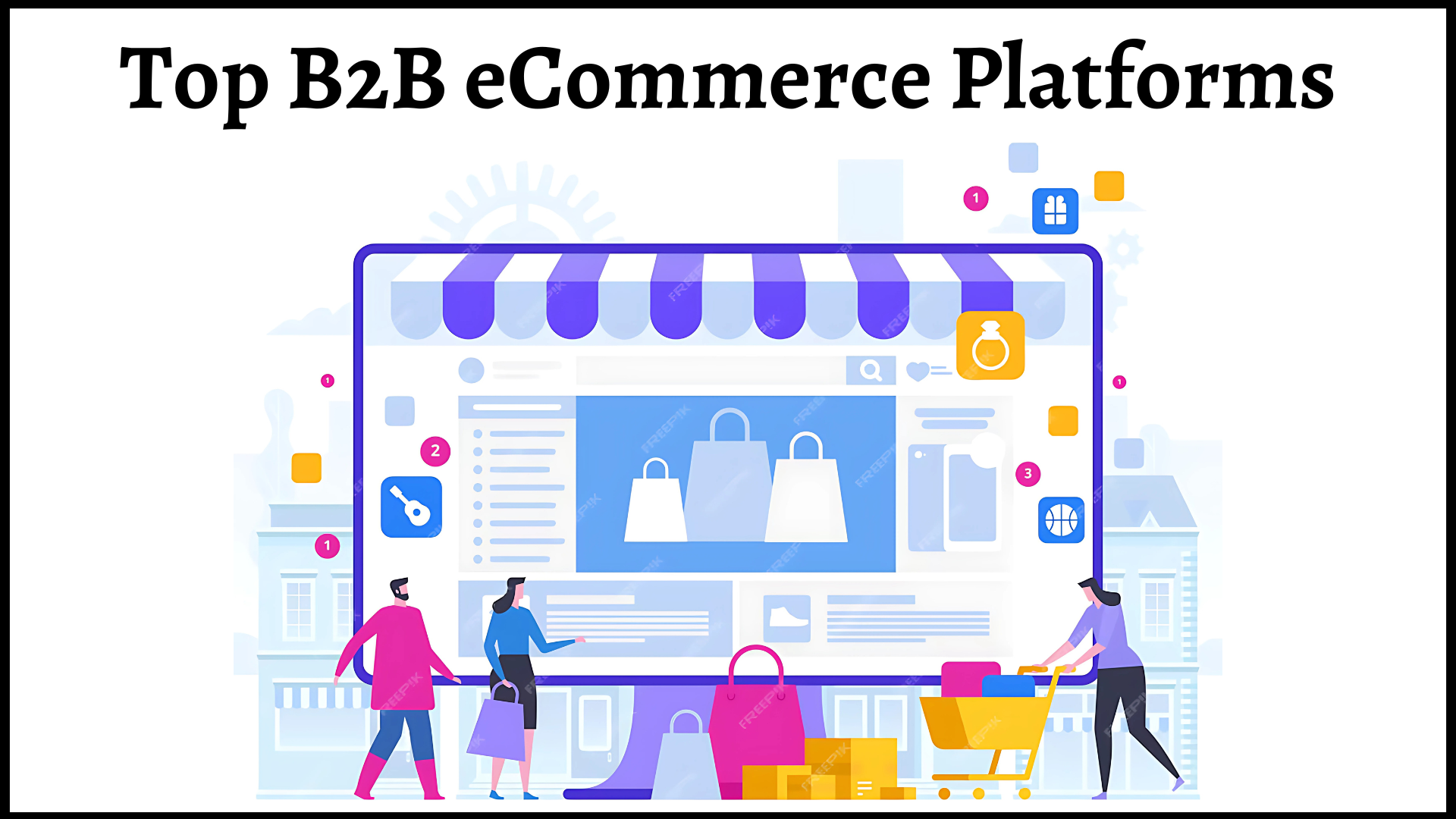
A B2B eCommerce platform is a digital system that allows businesses to sell products or services directly to other businesses online. It serves as a B2B digital storefront, providing buyers with access to catalogs, contract pricing, bulk ordering, and repeat purchases through a streamlined online experience.
Apart from that, a B2B ecommerce website supports complex needs like volume pricing, custom quotes, multi-user accounts, and integration with ERP or CRM tools. The main difference between B2B and B2C is the buying process. B2B purchases are larger, more structured, and often require approvals, negotiated contracts, and long-term relationships.
Choosing the best B2B ecommerce system ensures smoother operations, faster sales cycles, and stronger customer relationships. It also helps wholesalers and distributors run a more efficient B2B wholesale ecommerce platform built for long-term growth.
A Quick B2B eCommerce Platform Comparison Table
This quick comparison helps you evaluate the best B2B ecommerce solutions provider based on scalability, support for a headless solution, and essential wholesale features. It enables you to identify the best-fit solution for your business needs. Let’s have a look:
| Platform | Best For | Scalability | Headless Support | Key B2B Features |
| Adobe Commerce (Magento) | Large enterprises that need customization | High | Yes | Custom catalogs, contract pricing, multi-store |
| Shopify Plus | Fast-growing brands wanting ease + speed | Medium–High | Yes | Wholesale pricing, customer groups, automation |
| BigCommerce B2B Edition | Mid to large-sized businesses needing built-in B2B tools | High | Yes | Price lists, quotes, multi-storefronts |
| SAP Commerce Cloud | Global enterprises with complex B2B needs | Very High | Yes | Advanced personalization, contract pricing, multinational |
| OroCommerce | Manufacturing + enterprise B2B | Very High | Yes | Global catalogs, workflows, and multi-currency |
| commercetools | Manufacturing, wholesale, and distribution | High | Yes | RFQ, workflows, multi-organization accounts |
| VTEX Commerce Platform | API-first, headless B2B commerce | High | Yes | Modular APIs, multi-channel, flexible catalog |
| Shopware | Mid-market brands want flexible B2B features | Medium–High | Yes | Customer-specific pricing, budget control |
| Sana Commerce | Small to mid wholesalers wanting low-cost B2B | Medium | Limited | Wholesale pricing, bulk orders, customer groups |
| WooCommerce + B2B plugins/extensions | ERP-first B2B businesses | Medium–High | Possible | Real-time ERP pricing, inventory sync |
Detailed Reviews of the Best B2B eCommerce Platforms
This section provides a detailed overview of the leading B2B digital commerce platforms, helping you compare capabilities, strengths, and ideal B2B ecommerce examples to choose the right solution.
1. Adobe Commerce (Magento)
Adobe Commerce or Magento development blends flexibility with enterprise-grade control, making it a favorite for complex B2B catalogs, layered pricing rules, and deeply customized buying workflows at scale.
Pricing:
Enterprise-level, license + hosting + development. It typically has higher TCO but more substantial ROI for complex requirements.
Key B2B Features of Adobe Commerce:
- Customer-specific pricing and contract terms
- Quote/request workflows and approval flows
- Multi-store & multi-region management
- Robust API ecosystem and extension marketplace
| Pros of Adobe Commerce Highly customizable, strong community, powerful B2B module, supports complex workflows, and scalable architecture. | Cons of Adobe Commerce: Higher implementation and maintenance costs require an experienced eCommerce website development team. |
Ideal Use Cases:
Manufacturers, wholesalers, and distributors who manage thousands of SKUs, multiple storefronts, and regionalized catalogs.
Why it stands out:
Adobe’s continued investment in composable commerce solutions, personalization, and AI-driven experiences keeps it relevant for enterprises modernizing legacy B2B portals.
2. Shopify Plus
Shopify Plus focuses on speed, reliability, and ease of use. It helps B2B ecommerce companies launch quickly, iterate faster, and unify wholesale and direct-to-consumer operations on a single platform.
Pricing:
Shopify Plus website development cost is mainly for premium SaaS. It is a predictable monthly subscription with added fees for B2B ecommerce software and custom website development.
Key B2B Features of Shopify Plus:
- Customer-specific and wholesale price lists
- Draft orders and quote-like workflows
- Support for multiple storefronts/expansion stores
- APIs for ERP/CRM and headless commerce
| Pros of Shopify Plus User-friendly, fast to launch, strong app ecosystem, reliable hosting, great for multichannel selling. | Cons of Shopify Plus Advanced B2B logic often needs apps or custom work; limited deep customization of core checkout. |
Ideal Use Cases:
Brands moving from spreadsheets/manual orders to digital, or upgrading from basic B2C stores to unified B2B/B2C commerce.
Why it stands out:
Shopify development is doubling down on B2B features in Plus, making it a serious option for wholesalers who prioritize speed over heavy customization.
3. BigCommerce B2B Edition
BigCommerce B2B Edition combines native wholesale capabilities with SaaS convenience. It gives mid-market brands enterprise-style B2B features without complex infrastructure management.
Pricing:
SaaS subscription with B2B Edition add-ons; pricing scales with features and transaction volume.
Key B2B Features of BigCommerce:
- Customer groups with granular price lists
- Built-in quote and negotiated pricing tools
- Multi-storefront and multi-currency support
- Open APIs for ERP/CRM and PIM integration
| Pros of BigCommerce Strong B2B out-of-the-box, flexible SaaS, good headless support, solid multi-storefront capabilities. | Cons of BigCommerce Deep customization requires a B2B ecommerce development company; advanced features are reserved for higher tiers. |
Ideal Use Cases:
Wholesalers, distributors, and manufacturers that want a cloud platform with top-notch B2B web features but less complexity than full enterprise suites.
Why it stands out:
Its focus on “Open SaaS” and composable commerce makes it attractive to teams wanting enterprise capabilities without going fully custom.
4. Salesforce Commerce Cloud
Salesforce Commerce Cloud ties eCommerce directly into the Salesforce ecosystem. This offers a unified view of customers, sales, and service across complex B2B journeys.
Pricing:
Enterprise, quote-based pricing linked to GMV and feature scope; significant investment expected.
Key B2B Features of Salesforce Commerce Cloud:
- Contract-based and account-level pricing
- Complex approval and quote workflows
- Multi-region and multi-language storefronts
- Deep CRM and CPQ integration via the Salesforce stack
| Pros of Salesforce Commerce Cloud Powerful B2B ecommerce for distributors with rich customer data and enterprise-grade scalability. | Cons of Salesforce Commerce Cloud High cost, long implementation cycles, heavy dependence on the Salesforce ecosystem |
Ideal Use Cases:
Global B2B companies with large sales teams that need tight alignment between online ordering and CRM processes.
Why it stands out:
Its strength lies in blending digital self-service with traditional sales channels, ideal for complex, relationship-driven B2B models.
5. SAP Commerce Cloud
SAP Commerce Cloud is purpose-built for large enterprises that require tight B2b ecommerce integration between operations, supply chain, and core ERP-driven processes.

Pricing:
High, enterprise-grade, quote-driven pricing is typically attached to broader SAP contracts.
Key B2B Features of SAP Commerce Cloud:
- ERP-powered product, pricing, and inventory data
- Sophisticated B2B account structures and roles
- Global catalogs with multi-currency and taxation
- Robust APIs integration for omnichannel scenarios
| Pros of SAP Commerce Cloud Deep integration with the SAP landscape, robust for global scale, and well-suited for complex business rules. | Cons of SAP Commerce Cloud High TCO, complex implementations, best suited only for organizations already on SAP. |
Ideal Use Cases:
Enterprises seeking a unified stack where commerce, logistics, and finance sit inside the same ecosystem.
Why it stands out:
As more SAP customers modernize their front ends, SAP Commerce remains a natural choice for end-to-end digital transformation.
6. OroCommerce
OroCommerce is designed from the ground up specifically for B2B. It offers flexible workflows and native tools for distributors, wholesalers, and manufacturers.
Pricing:
Available in open-source and enterprise editions; pricing varies by support, hosting, and customization scope.
Key B2B Features of OroCommerce:
- Customer-specific pricing and contract rules
- RFQ and quote-driven ordering workflows
- Multi-website, multi-organization structures
- Built-in CRM and strong API support
| Pros of OroCommerce B2B-first design, flexible, suitable for complex account hierarchies, strong workflow engine | Cons of OroCommerce Requires a capable technical team or partner; UI is less polished than some SaaS options. |
Ideal Use Cases:
Distributors, industrial suppliers, and manufacturers with layered B2B hierarchies and negotiated order flows.
Why it stands out:
Its B2B-native DNA and open architecture appeal to companies outgrowing generic B2C platforms that have been hacked for wholesale.
7. Commercetools (Headless)
Commercetools is a cloud-native, API-first B2B ecommerce marketplace built for composable architectures. It gives teams total freedom to craft bespoke B2B experiences.
Pricing:
Enterprise-level, usage-based pricing aligned to API calls, GMV, and service footprint.
Key B2B Features of Commercetools:
- Flexible APIs to model complex pricing and contracts
- Support for multi-tenant, multi-region environments
- Omnichannel readiness across web, mobile, and apps
- Integration-friendly microservices architecture
| Pros of Commercetools Highly flexible, perfect for headless commerce development and composable builds. | Cons of Commercetools Requires serious engineering investment; not suited for teams wanting “plug-and-play” B2B. |
Ideal Use Cases:
Enterprises creating custom B2B portals, marketplaces, or multi-brand experiences with unique UX and process needs.
Why it stands out:
As composable commerce becomes mainstream, commercetools remains a reference choice for future-proof B2B architectures.
8. Shopware
Shopware offers a modern, flexible commerce stack with growing B2B capabilities. It balances customization with usability for mid-market businesses.
Pricing:
Tiered plans from commercial licenses to cloud options; more affordable than many enterprise suites.
Key B2B Features of Shopware:
- Customer-specific pricing and discounts
- Company accounts with roles and budgets
- Quotation and approval workflows
- Multi-store and internationalization support
| Pros of Shopware Modern tech stack, good UX, solid B2B suite, strong European presence. | Cons of Shopware Smaller ecosystem compared to giants; some advanced integrations may require custom work. |
Ideal Use Cases:
Growing wholesalers, manufacturers, and niche brands looking to modernize from legacy or homegrown systems.
Why it stands out:
Its blend of flexibility, B2B functionality, and TCO makes it appealing to businesses stuck between SMB tools and heavy enterprise suites.
9. WooCommerce + B2B Plugins
WooCommerce eCommerce platform development with B2B extensions turns a familiar WordPress setup into a low-barrier entry point for basic wholesale and business purchasing.
Pricing:
Low to moderate; hosting + premium plugins + development as needed.
Key B2B Features of WooCommerce:
- Wholesale and customer-specific pricing via plugins
- Hidden catalogs or login-only stores
- Bulk ordering and minimum order quantities
- Payment gateway integration and REST API
| Pros of WooCommerce Cost-effective, huge plugin ecosystem, easy to start, familiar WordPress admin. | Cons of WooCommerce Not ideal for very large catalogs or complex B2B logic; plugin conflicts can arise. |
Ideal Use Cases:
Smaller wholesalers and brands transitioning from PDF or email-based ordering to a simple B2B web portal.
Why it stands out:
Still one of the easiest, lowest-cost paths for businesses testing B2B platforms before committing to heavier platforms.
10. Sana Commerce
Sana Commerce tightly integrates eCommerce with ERP systems, especially Microsoft Dynamics and SAP, making ERP the single source of truth.
Pricing:
Mid-to-high, dependent on ERP integration scope, licenses, and implementation complexity.
Key B2B Features of Sana Commerce:
- Real-time ERP-driven pricing and inventory
- Customer-specific terms and discount logic
- B2B account and ordering workflows
- Tight sync with orders, invoices, and data
| Pros of Sana Commerce Strong ERP integration, reliable data consistency, and great for organizations with complex back-office rules. | Cons of Sana Commerce Less flexible if you’re not using supported ERPs; front-end customization options can feel constrained. |
Ideal Use Cases:
Manufacturers and wholesalers want minimal data duplication and strong ERP alignment.
Why it stands out:
As businesses focus on data consistency and real-time availability, ERP-first commerce remains compelling.
B2B eCommerce Features Every Business Should Look For
Understanding essential features of B2B ecommerce website development helps you choose a platform that supports personalized buying, seamless operations, and scalable growth across wholesale, manufacturing, and distributor workflows.
1. Customer-specific Pricing and Contract Pricing
Modern B2B buyers expect tailored pricing based on contracts, volume, or negotiated rates. Platforms must support dynamic price lists to deliver accurate, personalized transactions.
2. Self-service Portals
A strong B2B self-service commerce experience allows buyers to manage orders, track shipments, reorder products, and update account details without relying on sales teams.
3. Bulk Ordering and Quick Order Forms
A robust B2B ordering platform should let buyers place large or frequent orders instantly using SKU lists, CSV uploads, saved carts, or reorder templates.
4. Request-for-Quote (RFQ) Workflows
RFQ tools enable buyers to request custom pricing, negotiate terms, and approve quotes directly within the platform, improving efficiency for both sales and procurement teams.
5. Multi-Vendor Support
Essential for B2B marketplace platforms and distributors. The multi-vendor features enable multiple suppliers to manage catalogs, pricing, and inventory under a single unified storefront.
6. Multi-currency and Multi-language
B2B companies operating globally need a smooth international sales experience with built-in support for currencies, taxes, languages, and regional catalog variations.
7. Headless Commerce Compatibility
Platforms offering headless eCommerce solutions help businesses build custom frontends and seamless omnichannel experiences while maintaining backend flexibility and performance.
8. ERP, CRM, and PIM Integration Readiness
A modern B2B platform must support ERP-integrated ecommerce. This real-time data syncs with eCommerce inventory management software, customer terms, and workflows.
How to Choose the Right B2B eCommerce Platform (Expert Decision Guide)
Choosing the right eCommerce platform depends on your business size, industry needs, technology preferences, and budget. Use these scenarios to identify the ideal fit for your operations.
Step i. Start With Your Digital Goals
Begin by clarifying what you want your ecommerce upgrade to achieve, such as better efficiency, smoother ordering, or a more scalable digital foundation.
Step ii. Understand Your Catalog and Pricing Complexity
Review your product structure and pricing rules to identify which features you’ll actually need before building B2B eCommerce software solutions.
Step iii. Consider Your Industry’s Unique Requirements
Think about workflows specific to your sector. For example, B2B eCommerce for manufacturers may require multi-warehouse inventory, dealer access, or technical product data.
Step iv. Choose the Technology Model That Fits You
Decide whether you prefer SaaS simplicity, open-source flexibility, or the customization freedom of a headless or composable setup.
Step v. Check Integration Compatibility
Ensure the platform integrates smoothly with your ERP, CRM, PIM, and other essential systems that run your operations.
Step vi. Plan Your Budget Carefully
Look beyond initial B2B eCommerce platform development. Include licensing, customization, extensions, and long-term maintenance in your budget plan.
Step vii. Test Before You Commit
Request demos, trials, or proofs-of-concept to see how the platform performs with your data, workflows, and buyer journeys.
A Comprehensive B2B eCommerce Store Cost Breakdown
Building the best ecommerce platform for B2B involves multiple cost layers. Understanding the cost to build an eCommerce website helps you plan the proper budget for development, integrations, scaling, and long-term ownership.
Cost of B2B eCommerce Platform Development
| Cost Component | What It Covers | Typical Price Range |
| Licensing Costs | SaaS subscriptions or enterprise licenses for the B2B platform. | $2,000/year – $200,000+/year |
| Hosting | Cloud hosting, managed servers, or platform-specific hosting. | $50/month – $3,000/month |
| Development & Customization | UI/UX, custom features, workflows, backend logic, frontend build. | $10,000 – $250,000+ |
| Integrations (ERP, CRM, OMS) | Connecting commerce with backend systems for real-time data sync. | $5,000 – $150,000+ |
| Maintenance | Ongoing updates, security, monitoring, and technical support. | $500/month – $10,000/month |
| Extensions & Add-ons | Paid plugins/apps for B2B pricing, quotes, multi-store, and analytics. | $50 – $5,000 per add-on |
| Long-term TCO | Total multi-year cost including licenses, hosting, support, and upgrades. | $50,000 – $500,000+ annually |
B2B eCommerce Platform Development Trends Shaping 2026 & Beyond
The top B2B eCommerce web development trends highlight a shift toward faster, smarter, AI-powered buying experiences. These innovations are redefining the future of B2B commerce for global enterprises.
1. Headless Commerce
According to a report, over 40% of B2B merchants plan to adopt headless or composable commerce by 2025. A headless commerce development company helps B2B brands build custom, high-performance frontends and omnichannel experiences across web, apps, and sales portals. These are all powered by flexible APIs.
2. AI-Driven Personalization
AI tailors product catalogs, recommendations, and content for each buyer, improving relevance and boosting engagement throughout the B2B purchasing cycle. In fact, AI-personalization drives 25–30% higher repeat orders for B2B sellers.
3. AI-Powered Pricing & Quoting
Dynamic, AI-generated pricing models help automate negotiations, predict margins, and shorten quote approval time, especially for contract-heavy transactions. AI-powered pricing and quoting reduce quote turnaround times by up to 40%.
4. Composable Commerce
Enterprise adoption of composable commerce is expected to grow by 60%+. Modular commerce stacks allow businesses to choose best-in-class components rather than relying on rigid monolithic systems, increasing agility and innovation.
5. B2B Marketplaces
Manufacturers and distributors are building their own B2B marketplaces to expand assortments, onboard new vendors, and meet rising buyer expectations for streamlined procurement. B2B marketplaces will represent 30% of all B2B digital sales by 2026.
6. Unified Commerce
Connecting ERP, CRM, OMS, and B2B sourcing platform ensures consistent data, reduces errors, and creates seamless buyer experiences across every channel. Unified commerce delivers 20–35% faster order processing through integrated ecommerce systems.
7. Mobile-First B2B Buying
70% of B2B buyers now use mobile devices to research and approve purchases. With most B2B decision-makers using mobile devices, mobile-friendly ordering, approvals, reorders, and dashboards have become essential to modern business workflows.
Which B2B Ecommerce Platform Should You Choose?
Selecting the best B2B eCommerce platform should always be based on your goals, technical requirements, and long-term growth plans. Every platform offers different benefits of eCommerce web development, so the best fit depends on how well it aligns with your workflows, customer expectations, and integration needs.
Evaluate your business processes carefully before deciding, and choose a platform that can scale with you over time and offer maximum B2B ecommerce benefits.
Categories
Recent Posts
Popular Posts
- How to Choose a Reliable Offshore Development Partner?
- Transforming Web Development with HTMX’s Declarative Approach for Dynamic UIs
- Top 15 Ecommerce Growth Strategies to Maximize Sales in 2026
- What is B2B Web Design? Benefits, Best Practices, and Examples
- Why Your Conversion Funnel Needs a Composable Commerce Solution?