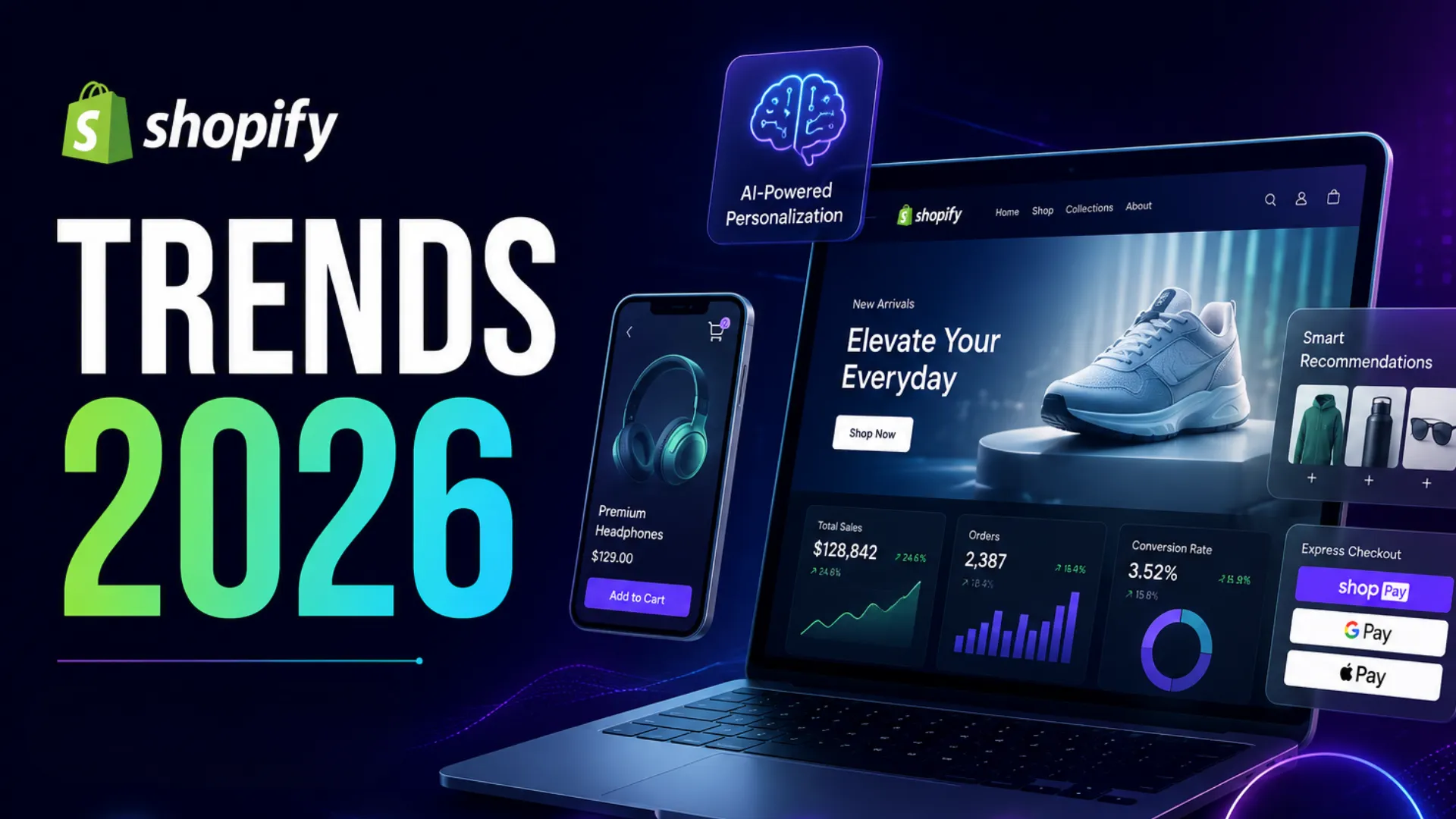
- Why Shopify Continues to Dominate Modern Commerce
- AI-Powered Commerce Is Reshaping Online Retail
- Headless Commerce Is Becoming Mainstream
- Mobile Commerce and Progressive Web Apps Continue to Rise
- Custom Storefront Experiences Are Driving Brand Differentiation
- Enterprise Brands Are Accelerating Shopify Plus Adoption
- Automation Is Becoming Core Commerce Infrastructure
- Omnichannel Commerce Is No Longer Optional
- B2B Commerce Growth Is Accelerating on Shopify
- SEO Is Becoming More Semantic and AI-Driven
- Conversion Optimization Is Becoming Data-Driven
- Store Performance Optimization Is Now a Ranking Factor
- The Shopify App Ecosystem Is Expanding Rapidly
- Demand for Specialized Shopify Expertise Is Increasing
- Emerging eCommerce Innovations Defining 2026
- Why Businesses Are Investing More in Shopify Development
- Conclusion
The Shopify ecosystem is evolving faster than ever. What started as a simple online store builder has now transformed into a complete commerce infrastructure powering startups, enterprise retailers, D2C brands, wholesalers, and global marketplaces.
In 2026, businesses no longer use Shopify only for launching websites. Brands are now building scalable digital commerce ecosystems focused on automation, personalization, performance optimization, customer retention, and omnichannel growth.
Consumer behavior has also changed dramatically. Modern customers expect fast-loading websites, AI-driven product discovery, seamless mobile experiences, personalized recommendations, and frictionless checkout journeys across every touchpoint.
This shift is pushing brands to closely monitor emerging Shopify development trends and adopt future-ready commerce strategies before competitors do.
Why Shopify Continues to Dominate Modern Commerce
Shopify remains one of the most preferred commerce platforms because it balances usability, scalability, flexibility, and enterprise-level customization. Unlike traditional commerce systems that require complex maintenance, Shopify enables businesses to scale rapidly while still supporting highly customized customer experiences.
Today, companies across fashion, electronics, healthcare, beauty, automotive, luxury retail, and wholesale sectors increasingly rely on Shopify ecommerce development to support long-term growth. Many growing brands now partner with a Shopify eCommerce web development company to build scalable storefront ecosystems designed around customer experience, performance, and operational efficiency.
The platform’s rapidly expanding ecosystem of APIs, integrations, AI tools, and automation infrastructure is one of the major reasons behind its global adoption.
AI-Powered Commerce Is Reshaping Online Retail
Artificial intelligence has become one of the most influential technologies in digital commerce. The rise of Shopify AI ecommerce capabilities is helping businesses create highly personalized customer journeys based on browsing behavior, intent signals, demographics, purchase history, and real-time interactions.
Personalized Product Discovery
AI-powered recommendation systems are significantly improving customer engagement and average order value. Instead of displaying generic product collections, Shopify merchants now use intelligent recommendation engines to show products customers are more likely to purchase based on behavioral analysis.
This improves:
- Product relevance
- Conversion rates
- Customer retention
- Session duration
AI Chatbots and Automated Customer Support
Customer support is becoming increasingly automated in 2026.
AI chatbots now handle:
- Order tracking
- Refund requests
- Product recommendations
- Customer onboarding
- Upselling opportunities
- Frequently asked questions
These systems improve operational efficiency while reducing response time dramatically.
Predictive Analytics and Smart Forecasting
AI-driven analytics platforms are helping businesses forecast:
- Inventory demand
- Seasonal trends
- Customer lifetime value
- Marketing performance
- Product demand fluctuations
These insights allow brands to make faster and more accurate business decisions.
Headless Commerce Is Becoming Mainstream
Modern brands increasingly prioritize flexibility, frontend performance, and immersive user experiences. This has accelerated the growth of Shopify headless commerce architectures. Headless commerce separates the frontend presentation layer from Shopify’s backend commerce engine, allowing developers to create fully customized storefront experiences.
Faster Website Performance
Website speed directly affects:
- SEO rankings
- User engagement
- Bounce rate
- Conversion performance
Headless storefronts built with modern frameworks like Hydrogen, React, and Next.js significantly improve loading speed and scalability.
Greater Frontend Flexibility
Traditional themes often limit customization possibilities. Headless development allows businesses to create:
- Interactive storefronts
- Dynamic shopping experiences
- Personalized interfaces
- Advanced filtering systems
- Immersive brand storytelling
This flexibility is becoming a major competitive advantage in 2026.
Mobile Commerce and Progressive Web Apps Continue to Rise
Mobile commerce now dominates global eCommerce traffic. Businesses that fail to optimize mobile performance risk losing customers to faster competitors. The implementation of Shopify PWA technology is helping businesses deliver app-like experiences directly within mobile browsers.
Why PWAs Matter in 2026
Progressive Web Apps improve:
- Mobile speed
- Offline accessibility
- Push notifications
- User engagement
- Checkout performance
Unlike traditional mobile applications, PWAs reduce friction by eliminating installation barriers.
Mobile-First UX Design
Modern Shopify stores are increasingly designed with mobile-first architecture instead of adapting desktop experiences later.
This improves:
- User experience
- Conversion rates
- Session retention
- Checkout completion
Mobile optimization has now become a direct ranking and revenue factor.
Custom Storefront Experiences Are Driving Brand Differentiation
Template-based commerce stores are no longer enough for competitive digital markets. Businesses increasingly invest in shopify custom development to create highly personalized customer experiences tailored to their industry and audience.
Advanced User Experience Personalization
Brands now implement:
- Dynamic navigation systems
- Personalized collections
- Interactive shopping journeys
- Custom checkout experiences
- Industry-specific workflows
These features help businesses differentiate themselves while improving customer satisfaction.
Theme Customization and Visual Identity
Investment in Shopify theme development is also increasing rapidly as brands focus heavily on visual storytelling and brand consistency.
Custom themes improve:
- User trust
- Navigation flow
- Accessibility
- Brand recognition
- Customer engagement
Enterprise Brands Are Accelerating Shopify Plus Adoption
As businesses scale globally, operational complexity increases significantly. This is one of the major reasons why Shopify Plus development continues to grow among enterprise retailers and high-volume brands.
Shopify Plus provides advanced infrastructure for:
- Global operations
- Multi-store management
- Enterprise automation
- International selling
- High-volume transactions
For brands evaluating Shopify or Shopify Plus, scalability requirements often become the deciding factor.
Global Expansion Capabilities
International businesses now rely heavily on Shopify Plus to manage:
- Multiple currencies
- Localized storefronts
- Regional tax structures
- International inventory
- Country-specific customer experiences
This flexibility supports rapid global expansion strategies.
Automation Is Becoming Core Commerce Infrastructure
Automation is now one of the foundational pillars of modern commerce operations. The adoption of Shopify automation systems is helping businesses reduce repetitive workflows while improving operational consistency.
Marketing Automation
Brands increasingly automate:
- Email campaigns
- Customer segmentation
- Loyalty programs
- Cart abandonment recovery
- Promotional workflows
These systems improve marketing efficiency while reducing manual workload.
Backend Operational Automation
Automation is also simplifying:
- Inventory synchronization
- Order management
- Shipment tracking
- Fraud detection
- Product synchronization
This improves operational scalability and fulfillment accuracy.
Omnichannel Commerce Is No Longer Optional
Consumers interact with brands across multiple platforms before completing purchases. This is why Shopify omnichannel strategies are becoming essential for modern retailers.
Unified Customer Experiences
Omnichannel ecosystems help brands create seamless experiences across:
- Online stores
- Mobile apps
- Social commerce
- Physical retail locations
- Online marketplaces
Customers now expect continuity regardless of where interactions begin.
Centralized Commerce Operations
Integrated omnichannel systems help businesses maintain:
- Real-time inventory visibility
- Unified customer data
- Consistent pricing
- Fulfillment accuracy
- Operational synchronization
This significantly improves customer retention.
B2B Commerce Growth Is Accelerating on Shopify
Shopify is no longer focused only on D2C commerce. The expansion of shopify b2b ecommerce capabilities is helping wholesalers and enterprise suppliers modernize procurement systems and improve buyer experiences.
Features Supporting Wholesale Businesses
Modern B2B Shopify ecosystems now support:
- Company accounts
- Customer-specific pricing
- Bulk ordering
- Flexible payment terms
- Private catalogs
- Multi-user purchasing systems
These capabilities simplify procurement workflows while improving operational efficiency.
SEO Is Becoming More Semantic and AI-Driven
Traditional SEO strategies alone are no longer enough in 2026.
Modern shopify seo trends focus heavily on:
- User intent
- Semantic relevance
- Entity optimization
- Conversational search
- Structured data
- AI-generated search summaries
Search Engines Are Prioritizing Context
Search engines increasingly evaluate relationships between topics instead of isolated keywords.
Businesses are now optimizing for:
- Voice search
- Conversational queries
- Topical authority
- AI answer engines
- GEO optimization
- AEO visibility
This shift is reshaping the future of search visibility.
Technical SEO and Performance
Technical optimization remains critical for organic growth.
Brands are heavily investing in:
- Core Web Vitals optimization
- Structured schema markup
- Mobile responsiveness
- Crawl efficiency
- Site architecture improvements
Technical performance now directly impacts rankings and conversion performance.
Conversion Optimization Is Becoming Data-Driven
As customer acquisition costs continue rising, brands are focusing more aggressively on profitability optimization. The growth of Shopify conversion optimization strategies is helping businesses maximize revenue from existing traffic.
Data-Driven User Experience Testing
Businesses increasingly rely on:
- A/B testing
- Heatmaps
- Funnel analytics
- Session recordings
- Behavioral tracking
These insights help brands identify friction points across the customer journey.
Checkout Optimization
Modern checkout optimization focuses on:
- Faster payment processing
- Simplified forms
- Trust-building design
- Express checkout systems
- Mobile payment compatibility
Even minor checkout improvements can significantly impact revenue.
Store Performance Optimization Is Now a Ranking Factor
Website speed has become one of the most important success metrics in modern commerce. This has increased investment in shopify store optimization strategies focused on technical performance and frontend efficiency.
Performance Improvements Businesses Prioritize
Brands increasingly optimize:
- Image compression
- JavaScript execution
- App management
- Server response times
Mobile rendering performance
These optimizations improve:
- SEO visibility
- Conversion rates
- Bounce rate reduction
- Customer retention
The Shopify App Ecosystem Is Expanding Rapidly
As businesses require more advanced functionality, demand for Shopify app development continues to rise rapidly. Custom applications help businesses create proprietary workflows and integrations tailored to operational needs.
Common Custom App Use Cases
Businesses are building apps for:
- ERP integration
- CRM synchronization
- Subscription systems
- Loyalty management
- Inventory automation
- Personalized recommendations
Custom apps provide greater flexibility compared to relying solely on third-party tools.
Demand for Specialized Shopify Expertise Is Increasing
As commerce ecosystems become more technically advanced, businesses increasingly require specialized development expertise.
Many brands now prefer to hire a skilled Shopify developer capable of handling:
- Scalable architecture
- Headless storefronts
- Performance optimization
- API integrations
- Advanced frontend development
- Enterprise workflows
This demand is expected to grow significantly throughout 2026 and beyond.
Emerging eCommerce Innovations Defining 2026
Several technologies are reshaping the future of digital commerce. Current Shopify trends 2025 discussions have now evolved into broader 2026 innovations focused on intelligent commerce ecosystems.
The latest Shopify ecommerce trends indicate strong momentum toward:
- AI-assisted shopping
- Voice commerce
- Augmented reality product previews
- Hyper-personalized storefronts
- Sustainable commerce
- Subscription ecosystems
- Predictive commerce infrastructure
At the same time, evolving ecommerce development trends are pushing businesses toward faster, more scalable, and customer-centric digital experiences. These innovations are rapidly redefining eCommerce Web Development Trends across global markets.
Why Businesses Are Investing More in Shopify Development
Modern commerce success requires far more than launching a basic online store.
Businesses now prioritize:
- Scalability
- Customer experience
- Operational efficiency
- Performance optimization
- Automation
- Search visibility
This growing complexity has increased demand for:
- shopify development services
- shopify store development
Brands increasingly invest in future-ready commerce ecosystems capable of adapting to rapidly changing customer expectations.
Conclusion
Shopify continues to evolve into one of the most powerful digital commerce ecosystems available today. Its flexibility, scalability, automation capabilities, and innovation-focused infrastructure make it a preferred platform for startups, enterprise retailers, wholesalers, and global brands alike.
In 2026, successful Shopify stores will be defined by:
- AI-driven personalization
- Headless commerce architecture
- Omnichannel customer journeys
- Advanced automation
- Semantic SEO optimization
- High-performance storefronts
- Mobile-first user experiences
Businesses that adapt early to these rapidly evolving Shopify eCommerce Development Trends will be better positioned to improve customer engagement, increase conversions, and achieve sustainable long-term growth in an increasingly competitive digital marketplace.
Categories
Recent Posts
Popular Posts
- How to Choose a Reliable Offshore Development Partner?
- Transforming Web Development with HTMX’s Declarative Approach for Dynamic UIs
- Top 15 Ecommerce Growth Strategies to Maximize Sales in 2026
- What is B2B Web Design? Benefits, Best Practices, and Examples
- Why Your Conversion Funnel Needs a Composable Commerce Solution?