
- What Is Shopify Conversion Rate Optimization?
- Top 10 Shopify Conversion Rate Optimization Tips
- Technique 1. Speed Optimization & Core Web Vitals
- Technique 2. High-Converting Themes & UX Enhancements
- Technique 3. AI-Driven Personalization
- Technique 4. Optimizing Product Pages for Conversions
- Technique 5. Checkout Optimization & Drop-Off Reduction
- Technique 6. A/B Testing & Data-Driven Experiments
- Technique 7. Email and SMS Automation for Recovery
- Technique 8. Optimizing Search & Navigation
- Technique 9. Social Proof, UGC & Trust Signals
- Technique 10. Upsells, Cross-Sells & Post-Purchase Offers
- Shopify conversion rate optimization Checklist
- Conclusion
- What Makes CSSChopper a Trusted Shopify CRO Expert
The ecommerce battleground is more competitive than ever, and Shopify brands are feeling the heat. With attention spans shrinking by the second, even a minor delay or confusing layout can send shoppers straight to a competitor. That’s why shopify conversion rate optimization has become a non-negotiable growth lever for online businesses.
Modern buyers expect fast, personalized, and frictionless shopping experiences. They want stores that load instantly, respond intelligently, and guide them smoothly from discovery to checkout. Brands using Shopify for ecommerce development benefit from built-in performance features that support fast, scalable storefronts.
So, to stay ahead, brands must optimize Shopify store journeys by understanding real ecommerce user behavior and applying smart conversion rate optimization strategies that remove friction. As consumer expectations evolve, relying on guesswork simply won’t cut it. You need actionable insights, targeted experiments, and proven Shopify sales growth tactics that create meaningful impact.
In this blog, we’ll walk through practical ecommerce optimization methods that actually work in 2026, from boosting page speed and refining UX to leveraging AI-powered personalization, creating better product pages, and optimizing smarter checkout flows.
What Is Shopify Conversion Rate Optimization?
Shopify CRO is the structured process of improving how effectively your store turns visitors into customers. It goes beyond surface-level tweaks and uses data-backed shopify conversion rate optimization strategies to enhance user experience, reduce friction, and influence buying decisions.
In 2026, a “conversion” isn’t limited to completed purchases. Actions like add-to-cart events, checkout initiations, product upsells, subscriptions, and even micro-engagements all count.
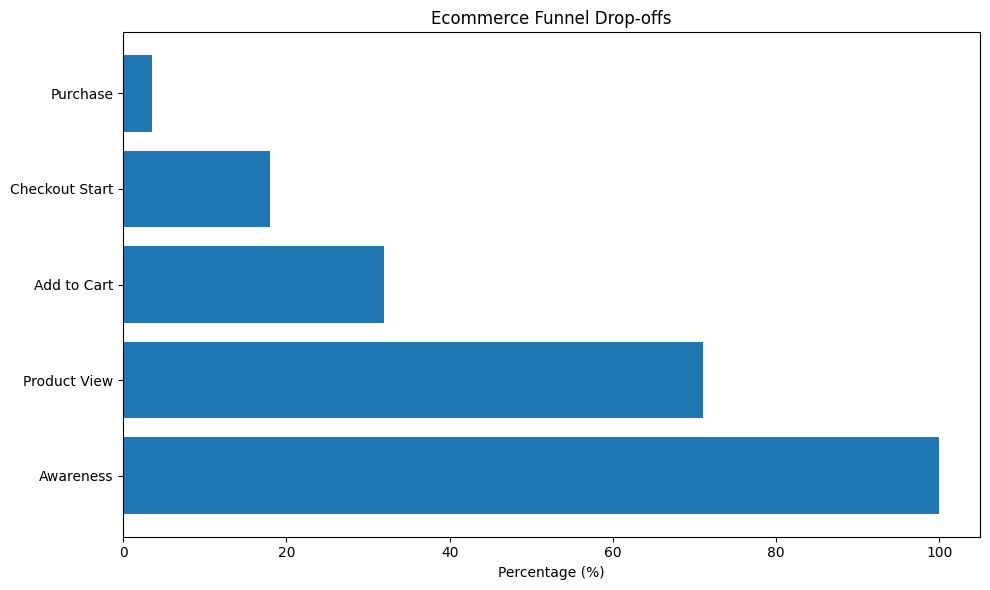
To understand what’s slowing people down or pushing them forward, you need Shopify analytics. These insights reveal buyer intent patterns and highlight UX friction points that affect the journey.
Benchmarks also keep evolving because customer expectations, device usage trends, and industry standards shift every year. For example, mobile shopping accounted for 63% of all ecommerce purchases in 2026.
As a result, staying competitive requires continual testing, refinement, and analytics-driven decision-making rather than one-time fixes.
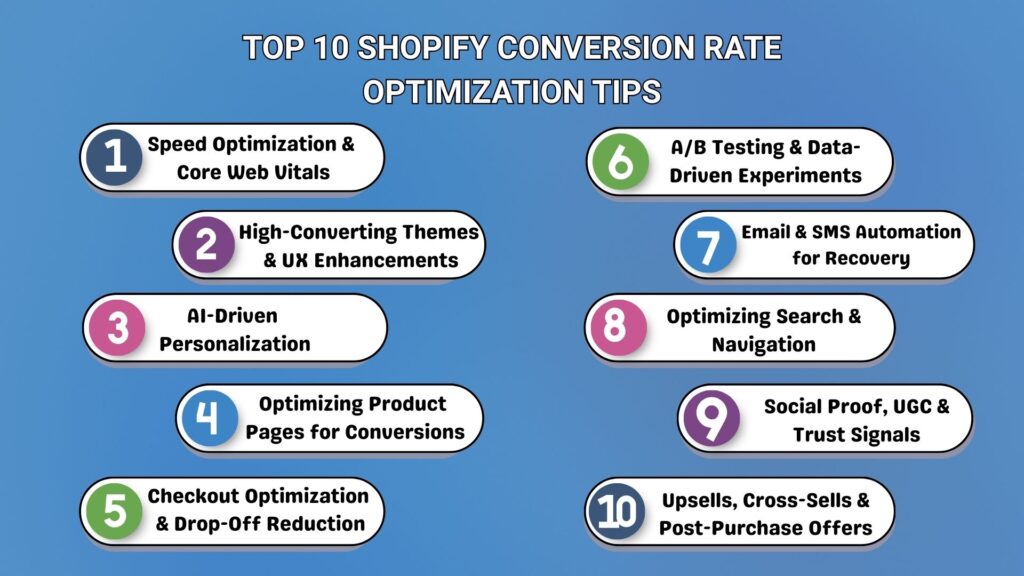
Top 10 Shopify Conversion Rate Optimization Tips
Let’s look ahead and explore the top Shopify CRO tips that help you convert more visitors, reduce friction, and boost revenue effortlessly.
Technique 1. Speed Optimization & Core Web Vitals
Nothing derails conversions faster than a slow-loading store, which is why Shopify page speed optimization remains one of the most critical steps in improving performance. Let’s see what Shopify merchants are adopting in 2026
Key Speed Optimization Actions
- Use AI-based image compression to reduce file weight
- Implement server-side rendering for faster content delivery
- Adopt Shopify Hydrogen/Oxygen for modern storefront performance
- Optimize for mobile ecommerce to improve user experience
- Leverage predictive shopping trends to anticipate traffic surges
Speed directly influences revenue. According to a report, nearly 70% of users say page speed affects their willingness to buy from an online retailer.
By refining Shopify storefront performance and focusing on essentials like reducing scripts, removing heavy apps, and hosting assets on fast CDNs, brands significantly improve Shopify site performance. These adjustments go a long way in reducing page load times and keeping Core Web Vitals healthy.
Technique 2. High-Converting Themes & UX Enhancements
Design sets the tone for conversions, which is why choosing high-converting Shopify themes is essential for building a modern, fast, and intuitive store. In 2026, leading brands rely on minimal UI, AI-driven personalization modules, and adaptive layouts that tailor the experience to each device and user.
Applying Shopify UX best practices requires a deep understanding of ecommerce user behavior, ensuring the design naturally pulls visitors toward their next step.
Key UX Enhancements That Drive Conversions
- Streamline layouts to support smoother customer journey optimization
- Use trust-building elements like badges and clarity-focused micro-copy
- Remove UX friction points that cause hesitation and drop-offs
- Implement structured navigation patterns for intuitive site navigation
- Use strategic white space, clear CTAs, and consistent visual hierarchy
These updates align closely with modern shopify ecommerce development trends, especially AI-driven layouts and adaptive interfaces. Apart from that, it eliminates confusion and builds trust, helping customers feel confident as they browse.
| UX Element | Impact % |
| Clear CTA Buttons | 42% |
| Minimal Layout | 38% |
| Faster Navigation | 33% |
| Consistent Visual Hierarchy | 26% |
| Mobile-first Layout | 61% |
Technique 3. AI-Driven Personalization
Shoppers increasingly expect brands to anticipate their needs, which is why Shopify personalization has become a powerful differentiator. With advanced algorithms and behavior tracking, AI customizes on-site journeys through AI ecommerce optimization, ensuring every visitor sees the most relevant products, messages, and offers at the right moment.
Key Personalization Enhancements
- Use AI-driven product suggestions to recommend items based on browsing history
- Rearrange content dynamically with onsite personalization tools
- Build curated smart bundles for a stronger personalized shopping experience
- Implement predictive search to mirror real sales-associate intuition
- Create tailored flows that offer seamless Shopify conversion optimization
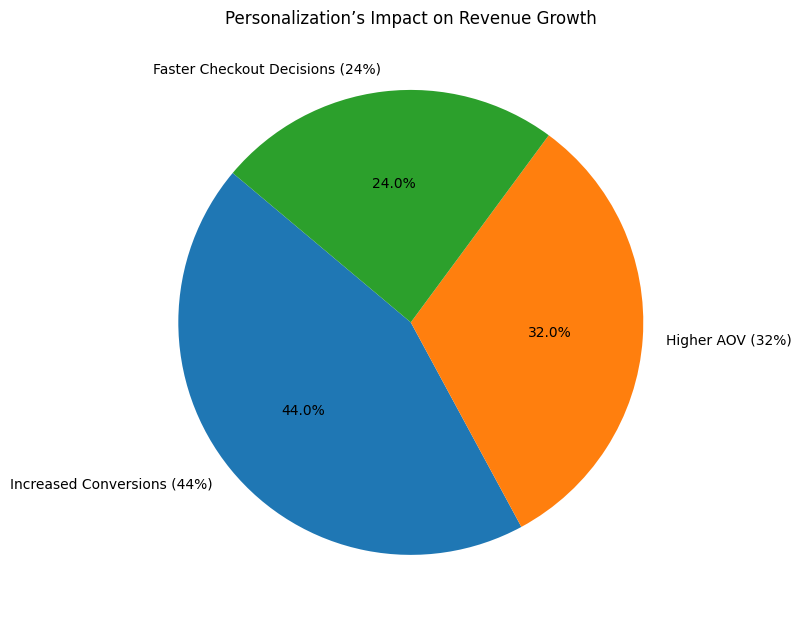
These enhancements work together to reduce decision fatigue, guide users more effectively, and increase conversions. When personalization is thoughtful and data-driven, brands can deliver shopping journeys that feel meaningful, intuitive, and uniquely designed for each customer.
Technique 4. Optimizing Product Pages for Conversions
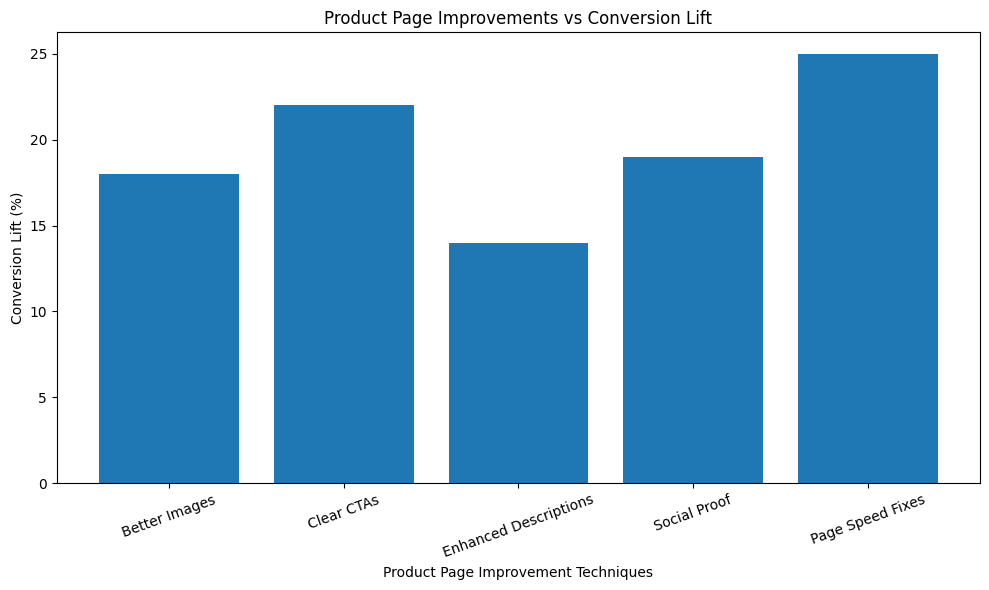
Product pages are the decision point for shoppers, which is why Shopify product page optimization remains one of the most powerful CRO techniques. In 2026, customers expect rich, interactive visuals such as 3D models, AR try-ons, 360-degree product views, and AI-generated descriptions. All of which help improve Shopify conversion rate by eliminating uncertainty and delivering instant clarity.
High-Impact Product Page Enhancements
- Structure pages using ecommerce funnel optimization to guide users naturally
- Review scroll and click behavior with heatmap analytics
- Write persuasive product descriptions that highlight benefits and emotional triggers
- Use high-converting product layouts with trust badges, reviews, FAQs, and comparison tables
- Add social proof elements to strengthen credibility and buyer confidence
When all these elements work together, product pages become far more than informational blocks. They build trust, reduce hesitation, and guide shoppers toward confident decisions.
Technique 5. Checkout Optimization & Drop-Off Reduction
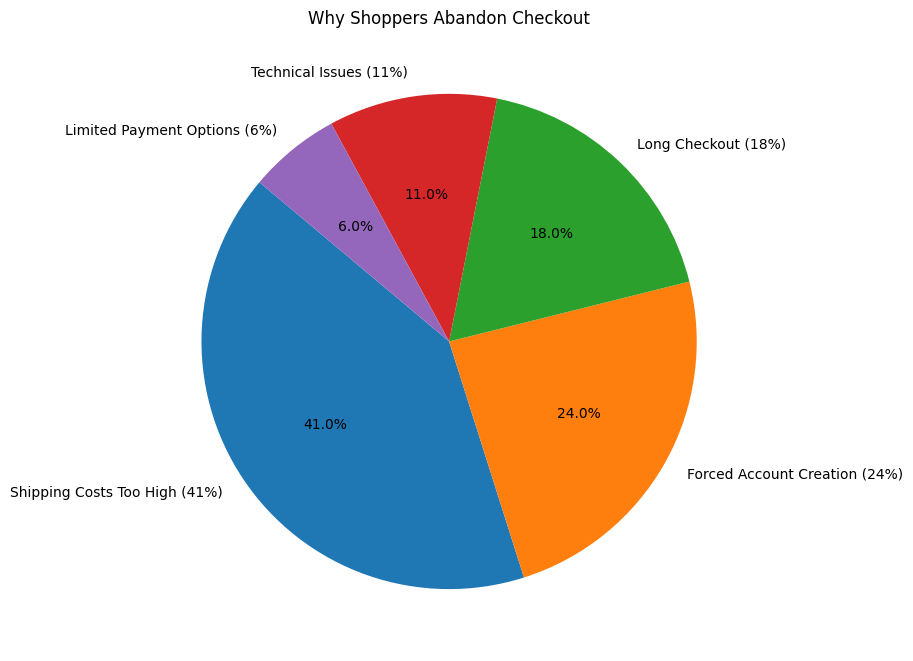
Checkout is the most critical step in the buying journey, which is why Shopify checkout rate optimization is essential to prevent revenue loss. With Shopify’s latest enhancements, such as one-page checkout powered by Shopify Flow, brands can significantly improve Shopify checkout performance by reducing steps and streamlining theprocess.
Checkout Optimization Actions That Drive Results
- Use dynamic shipping rates and auto-address tools to reduce cart abandonment
- Implement proven cart abandonment solutions that remove pricing surprises
- Offer autopay wallets (UPI, Apple Pay, GPay, Shopify Payments) for a faster, frictionless purchase flow
- Send targeted abandoned cart triggers such as reminders, limited-time offers, or personalized nudges
These optimizations make checkout quicker, clearer, and more user-friendly. By removing friction and supporting multiple payment methods, you not only improve mobile accessibility but also reclaim revenue that would otherwise be lost.
Technique 6. A/B Testing & Data-Driven Experiments
Every Shopify store behaves differently, which is why Shopify A/B testing is crucial for identifying what truly drives conversions. Rather than relying on assumptions, structured experiments reveal how variations in CTAs, hero banners, product titles, pricing formats, and layouts influence shopper decisions.
Key Experimentation Tools & Actions
- Analyze user actions with heatmap analytics
- Track scroll depth, clicks, and engagement through Shopify analytics
- Refine pages based on proven conversion rate optimization techniques
- Make informed changes using data-backed CRO decisions
- Apply insights to create greater heatmap-based improvements
When testing becomes a consistent practice, optimization shifts from guesswork to precision. Every tweak, whether adjusting a headline or modifying a layout, adds measurable value when supported by data.
A/B Test Ideas That Improve Conversions
| Test Type | Typical Uplift |
| CTA Color | 6–12% |
| Product Title Format | 8–14% |
| Pricing Format | 5–9% |
| Hero Banner | 12–22% |
Technique 7. Email and SMS Automation for Recovery
Recovering shoppers after they exit is one of the most cost-efficient ways to lift revenue, which is why Shopify email automation plays a crucial role in modern CRO. Automated cart abandonment flows help remind visitors of the items they left behind, offering timely incentives and reducing hesitation.
Pairing these emails with SMS ecommerce marketing gives you an instant communication channel to reconnect with distracted buyers.
Key Recovery Tactics for Better Conversions
- Use cart recovery Shopify systems to trigger behavior-based reminders
- Implement proven cart abandonment solutions to re-engage hesitant shoppers
- Send personalized abandoned cart triggers via SMS or email
- Strengthen retention with personalized post-purchase flows that educate and upsell
Together, these shopify store conversion rate optimization strategies form a powerful recovery engine. You’re not just bringing abandoned carts back to life, you’re reinforcing trust, increasing touchpoints, and nurturing long-term customer relationships that continue to deliver value.
Technique 8. Optimizing Search & Navigation
A shopper who can’t find the right product won’t move forward, which makes Shopify search optimization a core component of effective CRO. Today’s customers expect intelligent, fast search results powered by predictive search, smart suggestions, and semantic matching. Capabilities that enhance the overall predictive search experience and help users discover products even when their queries aren’t perfect.
Search & Navigation Enhancements That Improve Conversions
- Apply Shopify navigation best practices to simplify categories and filters
- Build smooth pathways using ecommerce funnel optimization techniques
- Use the best Shopify apps for CRO for smart filtering and recommendations
- Reduce friction with clear, intuitive site navigation across all devices
These tips create a shopping experience where customers move effortlessly from search to product pages. When navigation feels natural, and product discovery feels intelligent, shoppers spend less time thinking and more time buying.
Technique 9. Social Proof, UGC & Trust Signals
Building trust is one of the strongest ways to drive conversions, which is why Shopify social proof plays such a critical role in influencing buying decisions. Authentic reviews, ratings, testimonials, and community-driven content instantly reassure visitors who may be uncertain.
Adding UGC ecommerce elements, such as real customer photos, videos, or unboxing clips, creates an emotional connection and makes your brand feel human and credible.
Trust-Building Elements That Boost Conversions
- Display Shopify trust badges, such as secure checkout icons and payment guarantees
- Strengthen customer journey optimization with confidence-boosting micro-elements
- Showcase customer trust signals like verified purchases and bestseller tags
- Use push-style notifications and live shopping updates to add urgency
- Reinforce social validation to encourage stronger review-driven conversions
When these trust elements work together, they eliminate doubt and guide shoppers toward confident decisions. The more validation customers see, the more assured they feel and turn simple reassurance into measurable revenue growth.
Technique 10. Upsells, Cross-Sells & Post-Purchase Offers
Boosting revenue isn’t always about getting more traffic. Sometimes, it’s about maximizing the value of every customer. That’s where Shopify upsell apps and personalized recommendation engines shine.
By presenting relevant add-ons, complementary items, or premium versions at the right moment, you can dramatically increase average order value without adding friction.
What to Implement
- Use ecommerce cross-sell strategies to highlight complementary products on PDPs and carts.
- Offer AI-powered suggestions via a smart product recommendation engine based on browsing history and intent.
- Create dedicated post-purchase upsell Shopify pages that offer add-ons customers can accept with a single click.
- Introduce smart bundles and personalized offers that encourage shoppers to buy more in a single session.
These Shopify conversion rate optimization methods increase average order value and build meaningful customer momentum. When combined with personalized post-purchase flows, your store sets the stage for repeat orders, stronger loyalty, and long-term revenue growth.
Shopify conversion rate optimization Checklist
A well-optimized store doesn’t rely on guesswork; it thrives on consistent refinement. To truly optimize Shopify store performance, brands must revisit key areas regularly and ensure every touchpoint supports a seamless shopping journey.
Continual improvements in Shopify storefront performance help eliminate friction, boost trust, and increase conversions. By applying proven conversion optimization shopify methods, you create a foundation that supports long-term growth and customer satisfaction.
Quick Shopify CRO Best Practices
- Improve page speed and loading experience
- Refine product page layouts and content
- Strengthen trust with reviews and badges
- Simplify navigation and search
- Test CTAs, offers, and pricing regularly
- Personalize recommendations and messaging
- Optimize checkout flow and payment options
Conclusion
In a constantly evolving ecommerce landscape, shopify conversion rate optimization isn’t a one-time project; it’s a continuous cycle of testing, learning, and improving. Customer expectations shift, technology advances, and competitors refine their stores, meaning your approach must stay dynamic and data-driven.
By consistently applying effective shopify conversion optimization strategies, brands can maintain momentum, increase trust, and deliver seamless shopping experiences across devices. For brands needing deeper CRO execution, choosing to hire shopify professionals can speed up implementation and ensure long-term success.
What Makes CSSChopper a Trusted Shopify CRO Expert
CSSChopper has earned its reputation by helping brands transform their Shopify stores into high-converting, performance-driven growth engines. With data-backed strategies and a decade of ecommerce experience, our team brings technical precision and user-centric thinking to every project.
Why Brands Trust Us?
- Deep expertise in Shopify themes and headless development
- Advanced CRO frameworks powered by analytics and A/B testing
- UI/UX redesigns focused on reducing friction and boosting engagement
- Speed optimization, checkout refinement, and shopify mobile app conversion rate optimization
- AI-driven personalization and product recommendation setups
By blending technical excellence with proven CRO strategies, we deliver measurable improvements in conversions, AOV, and customer retention. As a leading shopify development agency, we help brands optimize themes, performance, and CRO workflows to scale with confidence.
Tags
Categories
Recent Posts
Popular Posts
- How to Choose a Reliable Offshore Development Partner?
- Transforming Web Development with HTMX’s Declarative Approach for Dynamic UIs
- Why Your Conversion Funnel Needs a Composable Commerce Solution?
- How to Outsource Web Development in 2025: Complete Guide
- What are the Top Web Development Trends for 2025?
